.svg)

.webp)
Your warehouse full of unsold stock? The EU just made it your legal liability.
For decades, excess inventory had a quiet exit: incinerate it, bury it, write it off. No questions asked. That exit closes on 19 July 2026.
Under the Ecodesign for Sustainable Products Regulation (ESPR), large enterprises will be banned from destroying unsold consumer goods — starting with textiles, apparel, and footwear. Miss the deadline and you're not just failing a sustainability audit. You're breaking EU law.
This isn't a future-state regulation still working its way through committees. It's live, it's binding, and the clock is running. ESPR is also the engine behind the Digital Product Passport — a broader shift requiring companies to track and prove the lifecycle of every product they sell into the EU market. If you haven't started preparing, you're already behind.
Here's what the ban means, who it hits, and what you need to do before July.
Every year, billions of euros worth of functional products are incinerated or sent to landfill — often to protect brand exclusivity or clear warehouse space. This linear model has long been treated as a silent, acceptable cost of doing business.
The ESPR (Regulation EU 2024/1781) changes that calculus. By embedding accountability into the product lifecycle, the regulation is designed to accelerate a systemic shift from linear disposal models to circular, data-driven ones. The destruction ban is its sharpest near-term tool.
19 July 2026 — Large enterprises are prohibited from destroying unsold goods. Priority product categories: textiles, apparel, footwear, and accessories.
2 March 2027 — Large enterprises must publicly disclose data on unsold goods — quantities and reasons for disposal — using a standardised EU reporting format.
By 2030 — requirements are expected to extend to medium-sized enterprises, significantly expanding the enforcement scope.
Micro and small enterprises are currently exempt from the July 2026 deadline. However, increasing transparency expectations across the full value chain are likely to occur over time.
The definition is deliberately broad and closes several long-used loopholes:
Compliance will depend less on how goods are disposed of and more on whether companies can demonstrate why those products were not used at all — backed by structured, auditable data.
Some goods may still require destruction under specific conditions. These exceptions are narrow and documentation-heavy:
Even these exceptions now require verifiable records, timestamps, and product-level traceability. The administrative burden is real.
1. Audit your deadstock data: Most enterprises lack consistent visibility into unsold goods across channels. Begin tracking volume, weight, product categories, and reasons for non-sale in structured, exportable formats. You cannot comply with what you cannot measure.
2. Formalise repair and refurbishment workflows: Returns with minor defects can no longer be written off. Investing in recommerce capabilities — cleaning, repairing, reselling — is quickly becoming a compliance requirement, not a sustainability initiative.
3. Build a donation-first partner network: Establish partnerships with charities and social economy actors now. The 8-week offering period introduces logistical complexity that cannot be handled reactively. Early relationships remove last-minute compliance risk.
4. Invest in demand forecasting: The most effective compliance strategy is producing less surplus in the first place. AI-driven inventory planning, made-to-order models, and improved sell-through forecasting will all play an increasingly central role.
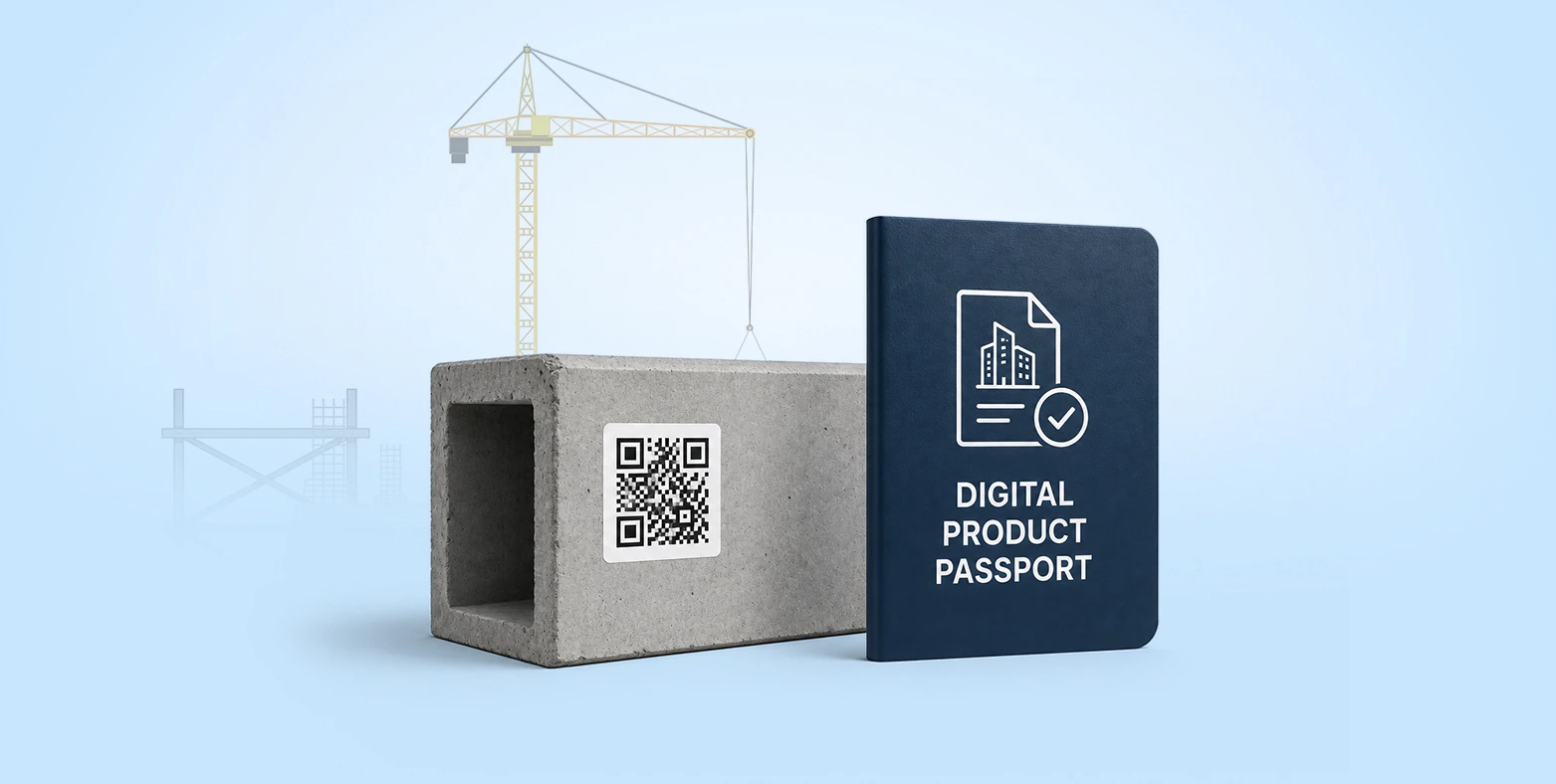
The destruction ban is one piece of a larger ESPR architecture. The regulation is also the primary driver of the Digital Product Passport (DPP) — a product-level data layer that will ultimately require companies to track and disclose lifecycle outcomes for every item they produce.
What appears to be a disposal ban is, in effect, a forcing function for product-level traceability. Companies building data infrastructure for ESPR compliance today will have a significant head start when DPP requirements arrive.
A Digital Product Passport is a digital identity for a physical product, accessible via a data carrier (such as a QR code or NFC chip). Rather than a simulation, it acts as a persistent data ledger that follows a product throughout its entire life cycle—from raw material sourcing to its final "end-of-life" stage.
Under the ESPR, the DPP is the mandatory vehicle for transparency, ensuring that every stakeholder in the value chain has access to verified sustainability and circularity data without the need for a complex behavioural model.
The DPP acts as the "Verified Record of Custody" for your inventory. Here is how it works specifically to manage unsold stock:
The ban on destruction and the rollout of the DPP are two sides of the same coin. While the ban sets the rule, the DPP provides the proof. For businesses in the apparel, footwear, and electronics sectors, integrating DPP technology today is the most effective way to "future-proof" supply chains against the tightening net of EU sustainability regulations.
Does the ESPR destruction ban apply to my business in July 2026? The July 2026 deadline applies to large enterprises selling consumer goods — particularly textiles, apparel, footwear, and accessories — into the EU market. Medium enterprises are expected to be covered by 2030. Micro and small enterprises are currently exempt.
Can we still donate or recycle unsold goods under ESPR? Donation is actively encouraged and is the preferred pathway. Recycling is permitted, but only if the product is no longer fit for its original use. Recycling a usable product to avoid the ban may still constitute a violation.
What documentation do we need to justify the destruction of unsold goods? You will need verifiable product-level records, timestamps, and evidence of the specific derogation claimed (a safety risk, an IP issue, or completion of the 8-week donation offering period). Generic disposal logs will not be sufficient.
What is the link between ESPR and the Digital Product Passport? The Digital Product Passport (DPP) is a key pillar of the broader ESPR framework. It will require product-level traceability data to be digitally accessible throughout the supply chain. ESPR compliance and DPP readiness are closely linked — investing in one directly supports the other.
Sources
.svg)

.svg)

%202026_1310.webp)

.svg)
.svg)