
4
min read :
January 1, 2026
January 8, 2026

How Manufacturers Comply with the EU Battery Regulation

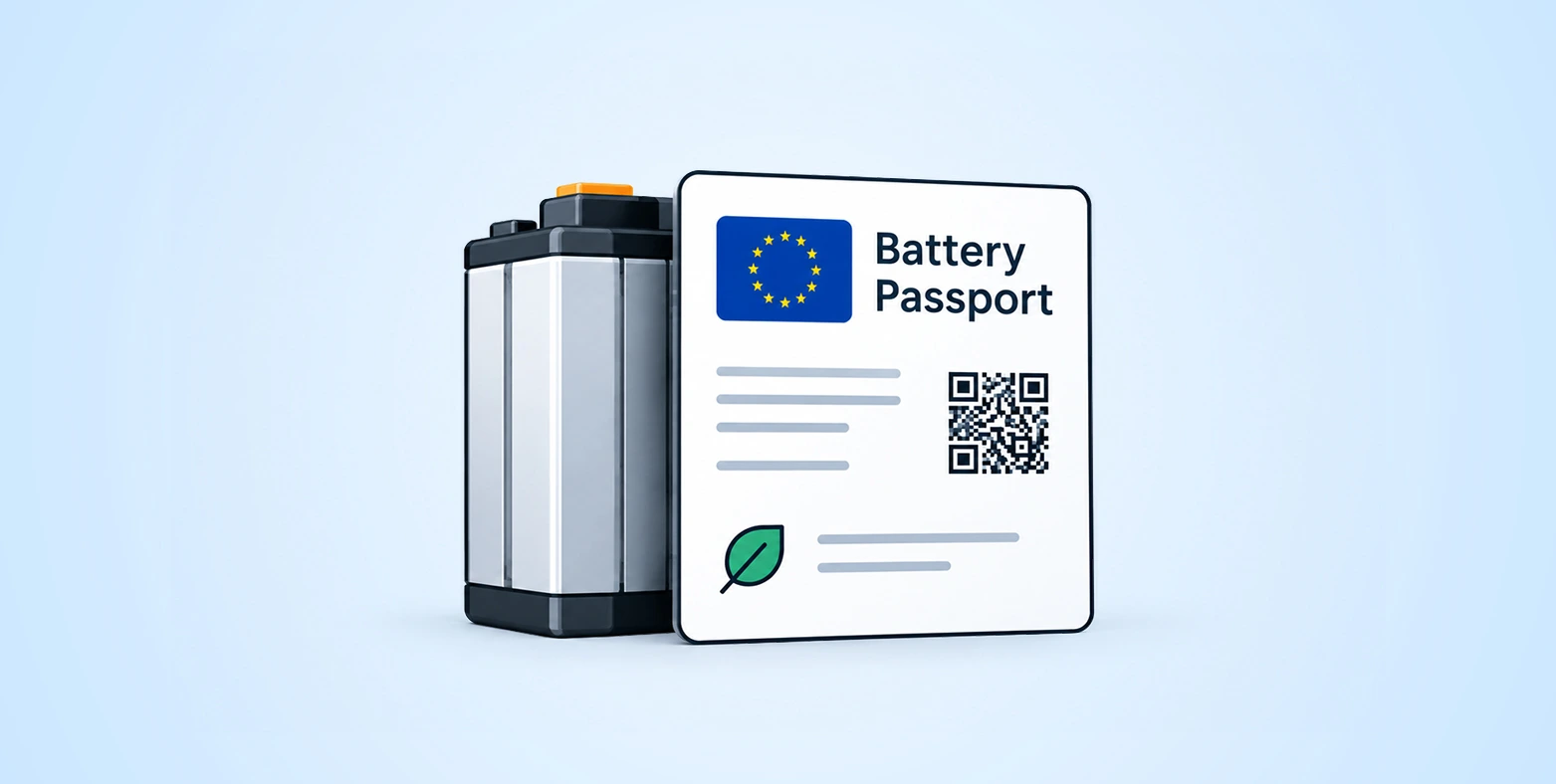
A featured image of How Manufacturers Meet EU Battery Regulation Compliance

In 2023, 1.5 million new battery-only EVs were registered in the EU, expanding the total fleet to over 4 million. Manufacturers must now track, report, and verify battery lifecycle data and Digital Battery Passports to comply with EU law and sell in the European market.

This guide explains which batteries are in scope, what data must be collected, and how to implement traceability and compliance systems to maintain EU market access.

What does the EU Battery Regulation Requires Manufacturers to do?

At an operational level, manufacturers must be able to:

  • Identify and classify all batteries placed on the EU market
  • Collect and maintain product, material, and sustainability data
  • Calculate and update battery carbon footprint data
  • Track recycled content and material composition
  • Assign unique identifiers (UIDs) and QR codes
  • Implement Digital Battery Passports where required
  • Maintain traceability from sourcing to recycling

Compliance is no longer a one-time declaration. It is an ongoing data and systems obligation.  

Which Batteries Are Covered Under the EU Battery Regulation

The regulation applies to all batteries placed on the EU market, regardless of chemistry or use.
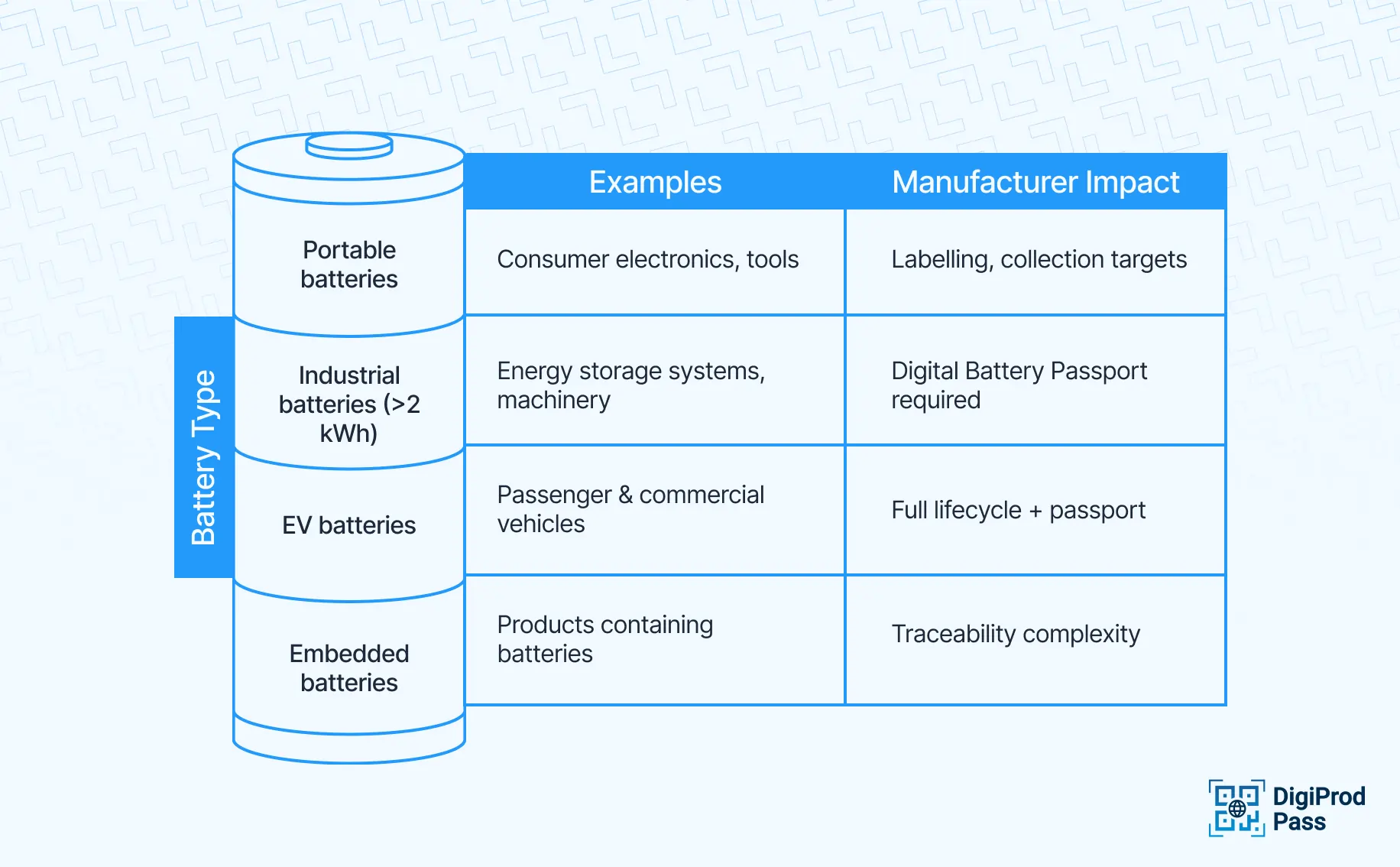
An infograpic of Which Batteries Are Covered Under the EU Battery Regulation

Important:
If your product contains a battery, you are part of the compliance chain, even if you do not manufacture the battery cell yourself.

EU Battery Regulation: Manufacturer Data Requirements Explained

Digital Battery Passports are a regulatory requirement under the EU Battery Regulation for specific battery categories, defining how manufacturers must collect, structure, and report sustainability and lifecycle data (read more about Battery Passports and their environmental impact).

The EU Battery Regulation introduces specific, structured data requirements. These must be quantified, auditable, and maintained over time.

1. Product & Technical Data

Manufacturers must maintain:

  • Battery model and variant identifiers
  • Capacity, chemistry, weight, and performance data
  • Manufacturing location and date

System requirement:
Version-controlled product master data, typically managed in PLM.

2. Environmental Footprint Data

Manufacturers must calculate and maintain:

  • Carbon footprint per battery model
  • Lifecycle stage breakdown (raw materials, manufacturing, distribution)
  • Updated calculations when suppliers or designs change

System requirement:

  • LCA tools integrated with product and supplier data
  • Automated recalculation and historical data retention

3. Recycled Content & Material Composition

Manufacturers must:

  • Track recycled content by material category
  • Validate supplier declarations
  • Maintain evidence for audits

System requirement:

  • Structured supplier data ingestion
  • Validation rules and exception handling
  • Audit logs linked to each update

4. Traceability & Identification

Manufacturers must:

  • Assign unique identifiers (UIDs) to battery models and, where required, individual units
  • Link physical batteries to digital records (QR codes) 

System requirement:

  • UID generation and registry
  • Secure resolution of QR codes to digital records. Unique identifiers and QR codes should follow globally recognised GS1 standards for traceability.

What is a Digital Battery Passport and Why Manufacturers Need It?

A Digital Battery Passport (DBP) is a structured digital record that contains verified battery data and is linked to a physical battery via a QR code or unique identifier. For a detailed explanation of scope, timelines, and applicability, read our Digital Battery Passports overview.

From February 2027, Digital Battery Passports are mandatory for:

  • EV batteries
  • Industrial batteries
  • Light means of transport (LMT) batteries

A Digital Battery Passport is not a PDF. It is a continuously updated dataset.

What Data Is Stored in a Digital Battery Passport?

A Digital Battery Passport typically includes:

  • Manufacturer and product identification
  • Battery chemistry and material composition
  • Carbon footprint and sustainability metrics
  • Recycled content information
  • Performance and durability data
  • End-of-life and recycling guidance

Manufacturers remain responsible for data accuracy and updates throughout the battery lifecycle.

Why Digital Battery Passports Matter to Manufacturers

For manufacturers, Digital Battery Passports act as an integration layer between internal systems and external stakeholders.

They allow manufacturers to:

  • Expose verified data without duplicating internal systems
  • Control access for regulators, recyclers, and partners
  • Maintain traceability across complex supply chains

Digital Battery Passports are a battery-specific implementation of the broader Digital Product Passport framework. A manufacturer-ready Digital Product Passport platform must support:

  • API-based integration
  • Regulatory schema alignment
  • Supplier onboarding
  • Version control and audit logs

Read how digital twins support Battery Passports.

EU Battery Regulation Implementation Checklist for Manufacturers

Use this checklist to assess readiness:

Product & Portfolio

  • Classify all battery types and variants
  • Identify batteries requiring Digital Battery Passports

Data & Systems

  • Map battery data across PLM, ERP, and MES
  • Define ownership for each required data field
  • Implement the UID and QR code strategy

Suppliers

  •  Align suppliers on structured data exchange
  •  Validate recycled content and material declarations

Digital Battery Passports

  • Select a DPP platform that integrates with existing systems
  • Enable versioning, lifecycle states, and audit trails

Common Manufacturer Challenges (and How to Solve Them)

Challenge: Battery Data Is Fragmented

Solution:
Define a canonical battery data model and map system ownership clearly.

Challenge: Supplier Data Is Inconsistent

Solution:
Enforce structured submissions and automated validation rules.

Challenge: Compliance Is Treated as a One-Time Project

Solution:
Embed compliance checks into product lifecycle and release workflows.

How DigiProd Pass Supports EU Battery Regulation Compliance

DigiProd Pass enables manufacturers to:

  • Aggregate battery data from PLM, ERP, and supplier systems
  • Publish Digital Battery Passports aligned with EU requirements
  • Maintain versioned, auditable lifecycle records
  • Support secure data access for regulators and recyclers

DigiProd Pass integrates into existing manufacturing IT landscapes, it does not replace them.

Conclusion

The EU Battery Regulation requires manufacturers to engineer traceability, sustainability, and data governance into their products.

Manufacturers who treat compliance as a data and systems challenge supported by Digital Product Passports and platforms like DigiProd Pass will:

  • Maintain EU market access
  • Reduce audit and recall risk
  • Build a foundation for future Digital Product Passport regulations

FAQs

Do all batteries need a Digital Battery Passport?
No. Digital Battery Passports are mandatory for EV, industrial, and LMT batteries from February 2027.

Who is responsible for battery data accuracy?
The manufacturer placing the battery on the EU market remains responsible.

What happens if manufacturers are non-compliant?
Non-compliance can lead to penalties, product withdrawal, and loss of EU market access.

Is this regulation only about sustainability reporting?
No. It requires full lifecycle traceability and operational data management.

Sources

EU Battery Regulation
Eurostat — 1.5 million new battery‑only electric cars registered in the EU in 2023
ACEA — European EV market stats
IEA — Global EV Outlook 2024

Recent Articles

down arrow
Apparel
check icon
Automotive
check icon
Battery
check icon
EEE
check icon
Plastic
check icon
Textiles
check icon
Furniture
check icon
Footwear
check icon
success message
Submission Successful!
Thanks for providing all the details correctly. We will contact you soon.
Return to homepage
error message
Submission Failed
We could not process your submission. Kindly provide all details correctly as instructed.
Resubmit
menu close