.svg)


The "grace period" for the European battery industry has officially ended. As of February 18, 2026, the Regulation (EU) 2023/1542 has moved from a legislative roadmap to an active enforcement reality.
For manufacturers of industrial batteries and EV OEMs, "End-of-Life" (EoL) management is no longer a downstream waste concern; it is a live regulatory requirement that determines whether your products can legally stay on the European market. To lead this year, you must move beyond the "vision" of the 2027 Battery Passport and solve the immediate data challenges of the 2026 reporting cycle.
While 2025 was focused on EV batteries, February 18, 2026, marks the expansion of the Carbon Footprint mandate to the industrial sector.
Effective reporting in 2026 requires looking exactly one year ahead. The EU is moving away from measuring "total weight" in recycling. By late 2027, the standard shifts to Material Recovery Efficiency, a granular audit of how many grams of specific critical minerals are successfully returned to the supply chain.
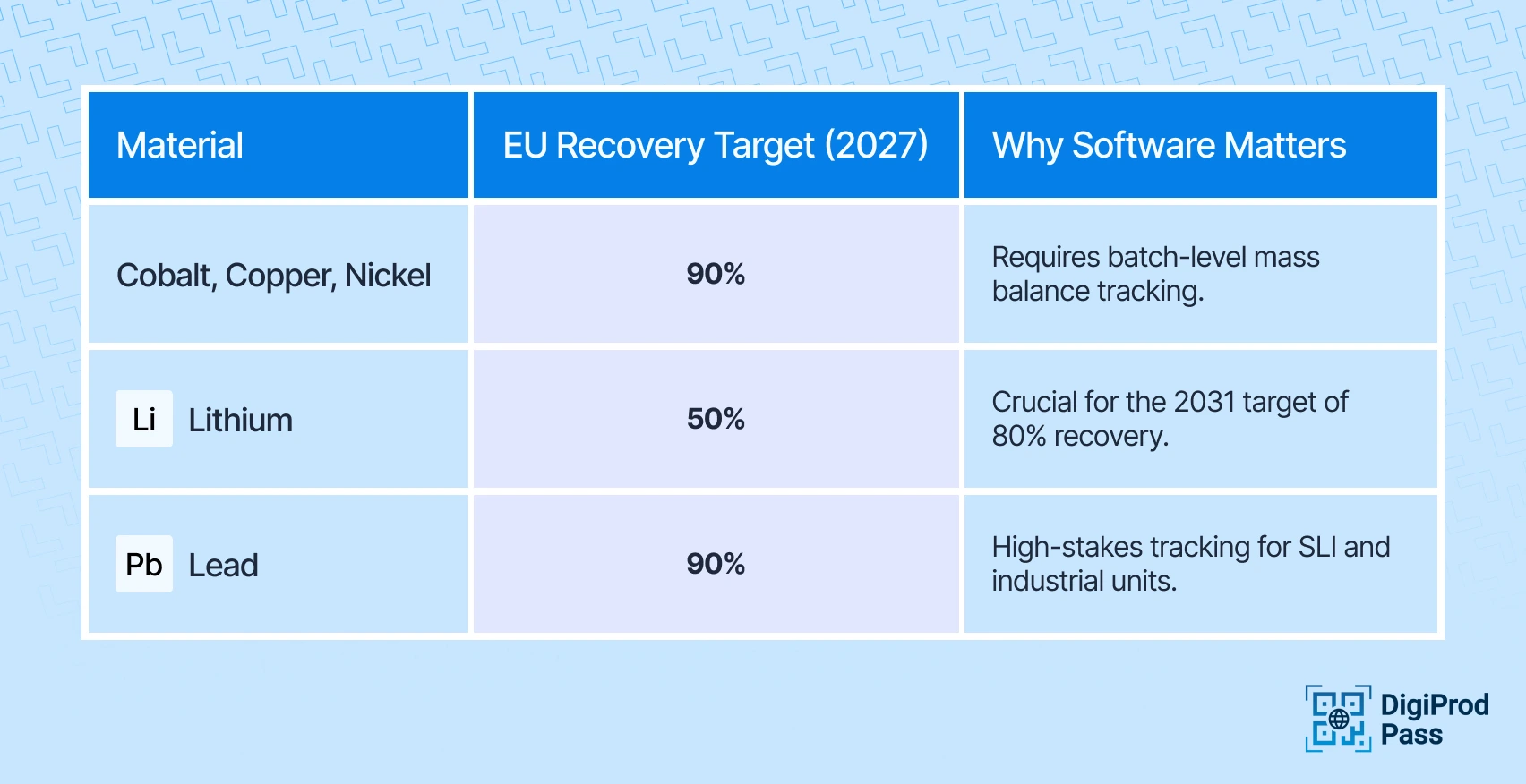
The "Black Mass" produced during shredding must be refined to meet these specific thresholds. If your recycling partners cannot provide batch-level mass balance data today, your 2026 year-end reports will likely fail the mandatory third-party verification required for next year's compliance.
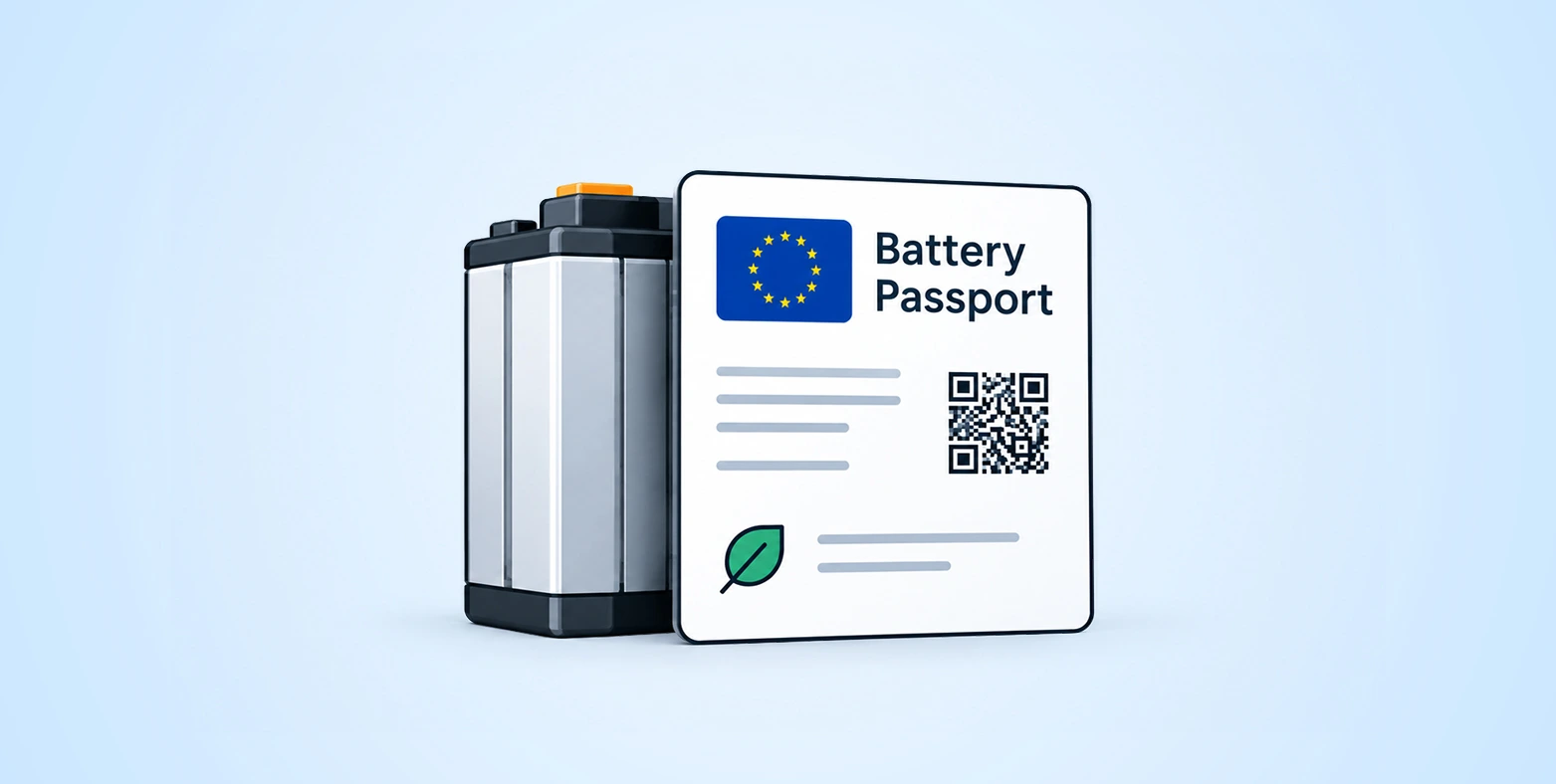
By February 18, 2027, every industrial and EV battery (> 2 kWh) will require a Digital Battery Passport (DBP). In 2026, the focus must shift from "what is the QR code?" to "how do we sync the data?"
The EU requires the passport to include real-time State of Health (SoH) and remaining lifetime data. This necessitates a direct digital handshake between your Battery Management System (BMS) and your reporting platform. Static data snapshots from the factory floor will no longer be sufficient for the 2027 audit cycle.
To lead the market in 2026, treat compliance as a data-driven logistics advantage:
Does the February 2026 rule apply to small industrial batteries?
Yes. Any battery designed for industrial use or any battery over 5kg not classified elsewhere is subject to these rules if its capacity exceeds 2 kWh.
What is the "Black Mass" reporting methodology?
As of late 2025, the EU has harmonised how recyclers calculate material recovery from black mass. This ensures that the recovery percentages shown in the infographic above are calculated identically across all 27 member states.
Are recycling certificates from 2024 still valid?
For general waste management, yes; for regulatory compliance under the new 2026/2027 thresholds, likely no. Certificates must now explicitly state the recovery efficiency of individual materials (such as lithium and cobalt) to meet the new audit standards.
Is the Battery Passport currently mandatory?
The passport itself becomes mandatory on February 18, 2027. However, the data that populates it, specifically the Carbon Footprint for industrial batteries, is mandatory as of February 2026.
Sources
Commission Delegated Act (July 2025)
JRC Technical Guidelines on Recycled Content
.svg)

.svg)

%202026_1310.webp)

.svg)
.svg)