
.svg)


Overcoming battery recycling barriers with passports provides transparency, mitigating problems like complex labelling, fragmented data, and logistical constraints. Battery passports ensure verified data on the lifecycle from sourcing to shelf and beyond - recycling. Battery passports make battery recycling more efficient, accountable, and eco-friendly by standardising information and improving traceability throughout a battery's life.
While a circular battery economy presents an appealing prospect, the industry continues to face persistent obstacles.
Once a battery leaves production, information about its chemistry, materials, or manufacturing process often gets lost.
Different manufacturers use different labels and documentation systems.
These barriers not only limit recycling efficiency but also slow progress toward sustainable, circular supply chains.
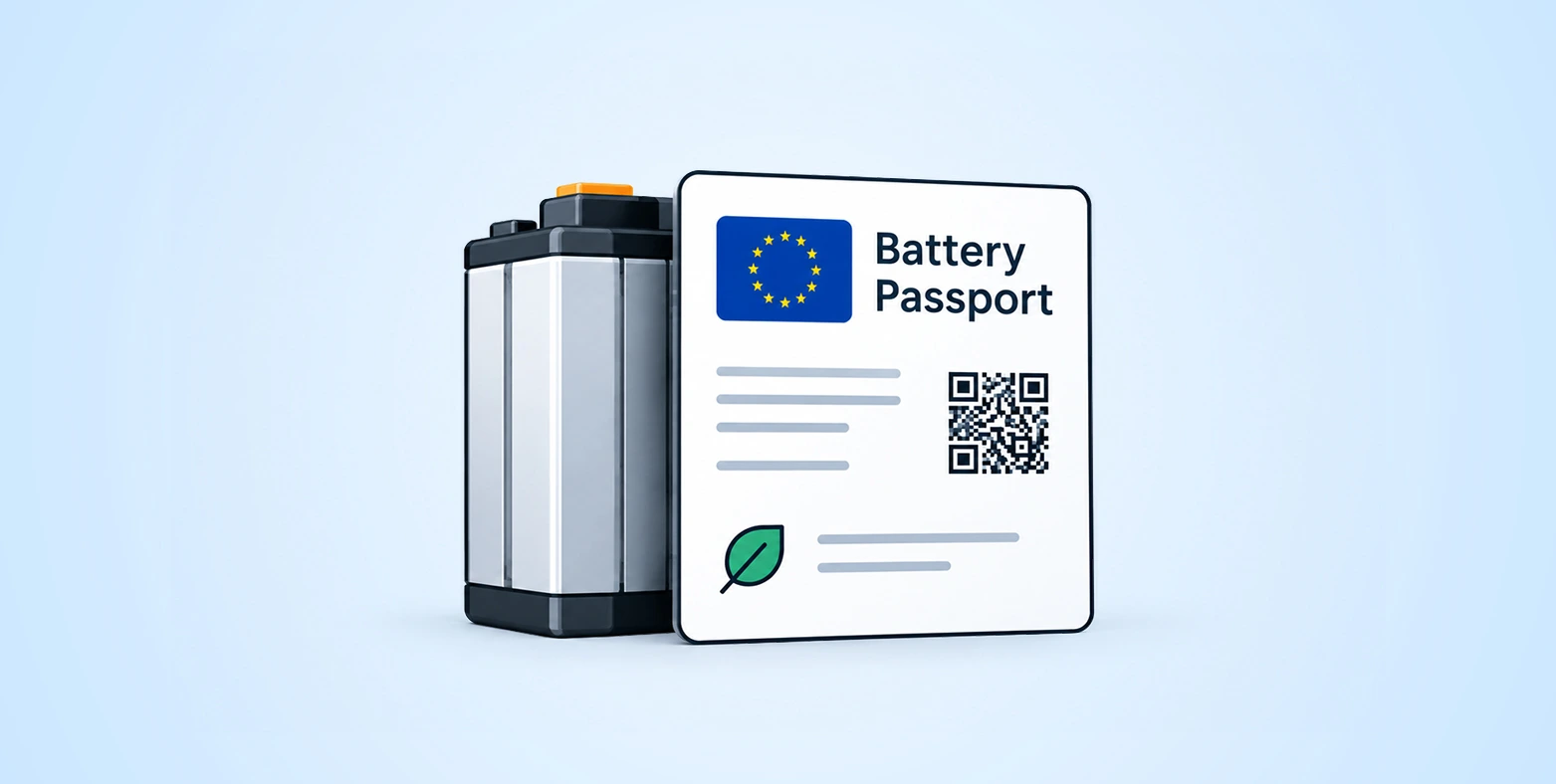
Battery passports, the digital ID cart of every battery, directly address these core problems. They contain verified data on materials, origin, manufacturing emissions, and lifecycle history.
By assigning each battery a unique digital ID, passports make all essential data accessible at every stage of its life. Recyclers can instantly identify composition, safety data, and disassembly instructions which reduce uncertainty and waste.
Under frameworks like the EU Battery Regulation (EU 2023/1542), battery passports standardise data formats and ensure consistency across producers. This helps recyclers and regulators interpret and exchange information seamlessly.
Recyclers benefit from transparent, verified data, as it allows them to accurately quantify recoverable value prior to processing, thereby increasing profitability. This data also provides greater consumer confidence in recycled materials, which in turn promotes their reuse in the production of new batteries.
Battery passports serve as integrated compliance mechanisms. They automate reporting, validate origin claims, and guarantee compliance with developing international regulations.
The move from theory to practice is already underway. Initiatives like DigiProd Pass, developed by Technovative Solutions, are advancing the implementation of Digital Product Passports (DPPs) across multiple sectors, including batteries. Through projects such as the BASE initiative and early collaborations within the Battery European Partnership Association (BEPA), DigiProd Pass is helping shape the infrastructure required for battery passport deployment under the EU Battery Regulation. Its framework demonstrates how verified lifecycle data—covering material sourcing, production, and end-of-life recovery—can be securely shared across stakeholders. While large-scale pilots for EV and industrial batteries are still emerging, these efforts lay the groundwork for data-driven traceability and circular value recovery in real-world industrial environments.
Battery passports represent a transformative solution for recycling. They address the historical challenges that have hindered battery recycling, converting it into a mechanism that provides companies with both competitive and environmental advantages.
Battery recycling is crucial for a sustainable electric vehicle (EV) future, yet the current system faces significant inefficiencies and a lack of transparency. Battery passports address these issues by introducing clarity, consistency, and accountability throughout the entire battery lifecycle.
Through transparent data and digital traceability, battery passports enable the safe, profitable, and sustainable recycling of every EV battery. This effectively closes the loop, ensuring a more sustainable future.
Sources
Circular Economy Action Plan
.svg)

.svg)



.svg)
.svg)


%202026_1310.webp)