.svg)

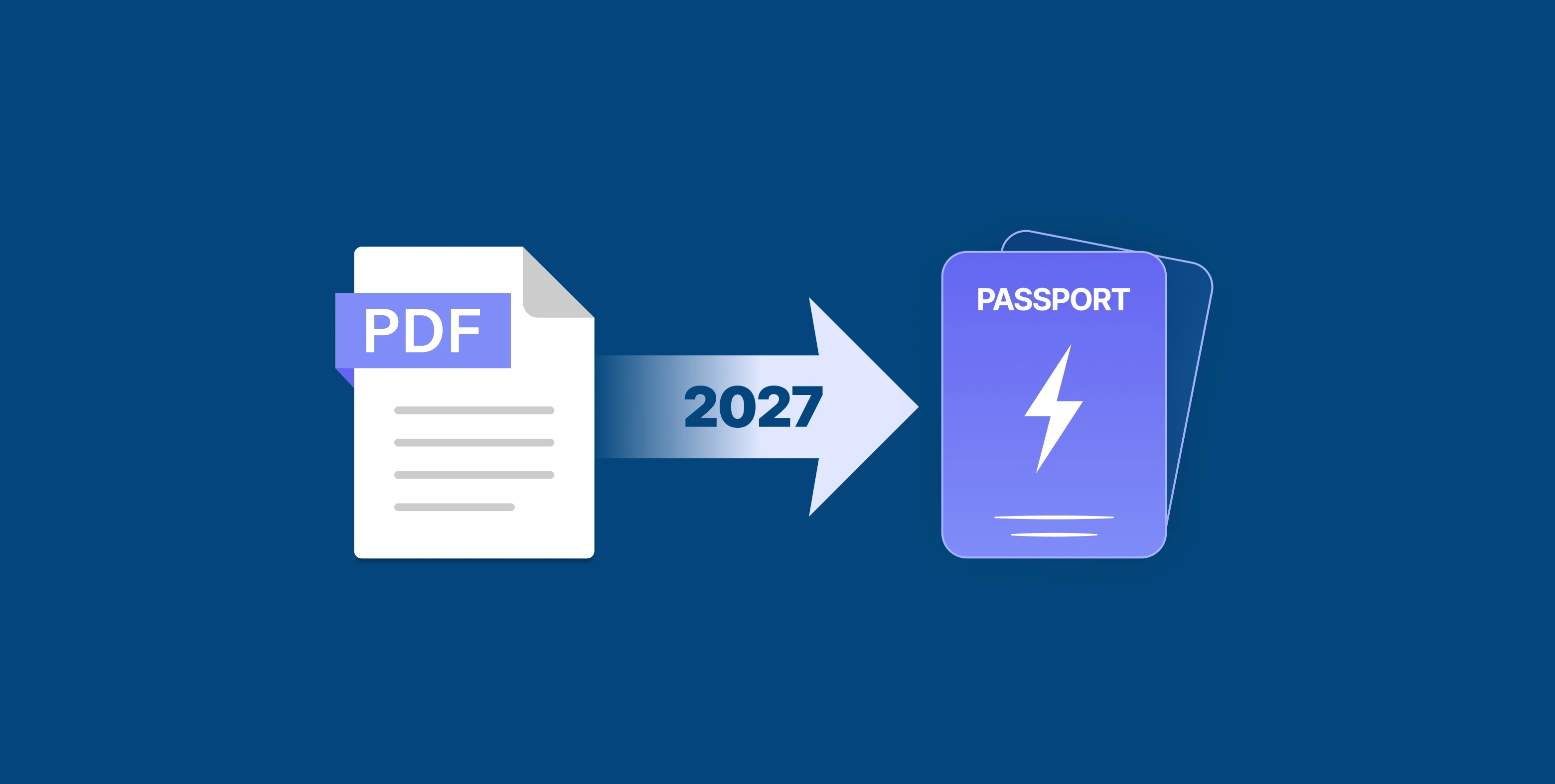
For decades, battery compliance followed a predictable, "static" rhythm: perform a laboratory test, generate a PDF (UN38.3 or CE Declaration), and file it away for a potential audit.
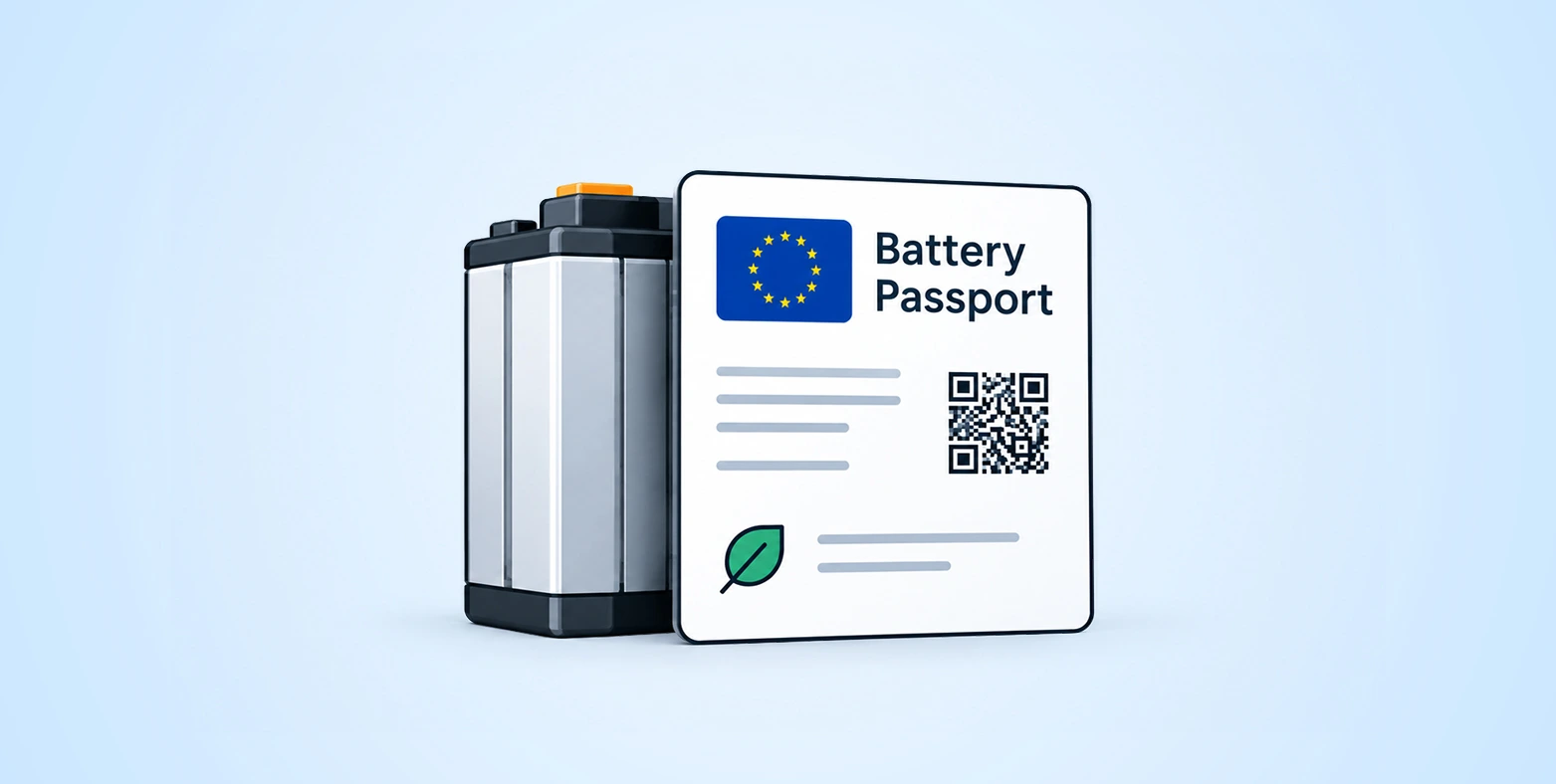
However, with the Regulation (EU) 2023/1542, that rhythm is being replaced by a digital-first architecture ahead of the Battery Passport's 18 February 2027 launch date for LMT, EV, and industrial (>2 kWh) batteries. (Note: a separate 'Stop the Clock' amendment — Regulation (EU) 2025/1561 — postponed the supply-chain due-diligence deadline to 18 August 2027; it did not change the passport date itself.) The Digital Battery Passport (DBP) is not just a digital version of your old reports—it is a live, interoperable data exchange.
If your technical team is still treating the DBP as a "document," here is how the regulatory landscape is shifting beneath you.
Legacy Compliance: A single Type Approval or REACH declaration typically covers an entire product line (e.g., 50,000 identical cells).
The Passport Shift: While the DBP contains model-level data (chemistry, dimensions), it is fundamentally tied to a Unique Identifier. For EV and industrial batteries, the passport must eventually track the specific State of Health (SoH) and cycle life of that individual unit. You are moving from "Batch Reporting" to "Digital Twin Tracking." This is a core component of our autoMatPass project, which tracks individual automotive components through 2028.
Legacy Compliance: Reports like the CE Technical File are snapshots in time. They only change if the physical design changes.
The Passport Shift: Under Article 77 and Article 14 (battery management system data access), the DBP must be updated throughout the use phase. When a battery is repaired, remanufactured, or enters a "second life" (e.g., EV battery to stationary storage), the passport must reflect these changes. It is a continuous ledger of the battery’s journey.
One of the biggest misconceptions is that a "Public Passport" means "Public Blueprints." The EU framework (Article 77 and Annex XIII) utilises Role-Based Access Control (RBAC) to ensure data is shared only on a "need-to-know" basis:
Pro Tip: This tiered data visibility is what allows manufacturers to comply with transparency mandates without sacrificing their proprietary chemical or structural IP.
Legacy Compliance: Many manufacturers are accustomed to self-certifying chemical standards or safety protocols.
The Passport Shift: For batteries > 2 kWh, data on Carbon Footprint and Recycled Content are no longer just "your word." It must be verified by an EU Notified Body. The DBP serves as the digitally signed proof of this third-party verification, instantly accessible to market surveillance authorities.
Legacy Compliance: You hold supplier certificates (RoHS/REACH) in private databases.
The Passport Shift: You are now the Data Orchestrator. Your DBP must link to the due diligence data of your raw material suppliers (Cobalt, Lithium, Nickel). This requires an interoperable 'Digital Thread' that connects your factory to the mine. The CIRPASS-2 Standardisation Workgroup is currently finalising these semantic standards, ensuring that data from a Lithium mine in South America is readable by a recycler in Belgium.
Don’t wait for the 2027 deadline. The transition requires a fundamental shift in how you handle data architecture:
At DigiProd Pass, we specialise in orchestrating the transition from legacy compliance silos to interoperable, Catena-X-aligned digital assets. Is your data infrastructure ready for the February 2027 mandate?
Battery Passport Compliance FAQs
Q: Does the Battery Passport replace my CE Technical File? No. The Technical File remains the proprietary "brain" of your compliance, containing your full IP and design schematics. The Battery Passport acts as the digital interface—a curated "window" that makes only the legally required attributes accessible to the public, repair shops, and recyclers.
Q: How do we handle the 90+ mandatory data attributes? Successful teams are using 2026 to map these attributes across their supply chains. The goal is to move away from manual data entry toward Automated Data Pipelines. These pipelines pull real-time data directly from your ERP, PLM, and Battery Management Systems (BMS) to ensure the passport remains a "living" record.
Q: Who is legally responsible for the data in the Passport? The Economic Operator (the manufacturer or importer placing the battery on the EU market) is legally responsible for the creation and accuracy of the passport. However, the DBP is tied to the physical asset; it is a permanent digital twin.
Q: What happens to the data if the battery is sold for a "Second Life"? The DBP is designed to be transferable. When a battery is repurposed or sold (e.g., from an EV to a stationary storage system), the legal responsibility for maintaining the data moves to the new operator. This ensures a continuous "digital thread" throughout the battery's entire lifecycle.
Q: How is proprietary chemical data protected from competitors? The DBP utilises Role-Based Access Control (RBAC). While a recycler requires specific chemistry data for safety and material recovery, they do not gain access to your proprietary "recipes" or manufacturing secrets. Only Regulators and Notified Bodies have access to the full "Digital Thread" for verification purposes.
Q: We already perform Corporate ESG reporting; isn’t that enough? Not quite. Corporate ESG reporting is typically "top-down" and company-wide, focusing on aggregate impact. The Battery Passport is "bottom-up"—it requires granular, verified data for every individual battery model and, eventually, every unique serial number placed on the market.
.svg)

.svg)

%202026_1310.webp)

.svg)
.svg)