


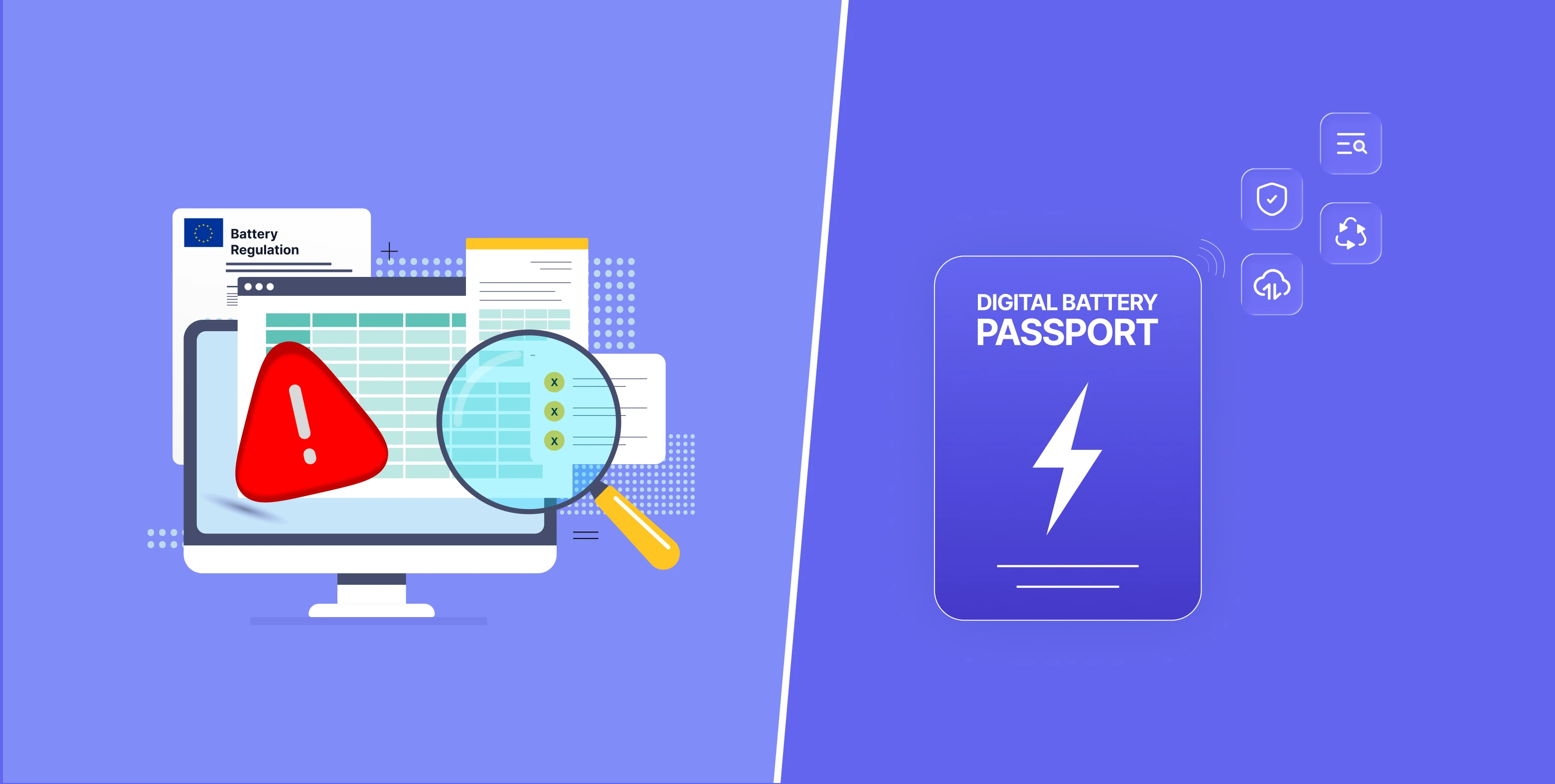
Still using spreadsheets to track batteries for EU compliance? Manual tracking is slow, error-prone, and risky under the new EU Battery Regulation. With lifecycle data, traceability, and Digital Battery Passports now mandatory, spreadsheets just can’t keep up. Learn why digital systems outperform manual tracking and how they make compliance faster, safer, and audit-ready.
Spreadsheets are familiar and flexible, which is why they’re still widely used. But they weren’t designed to handle the complexity of battery compliance.
They struggle with:
Relying on manual tracking increases the risk of reporting delays, non-compliance, and potential fines.
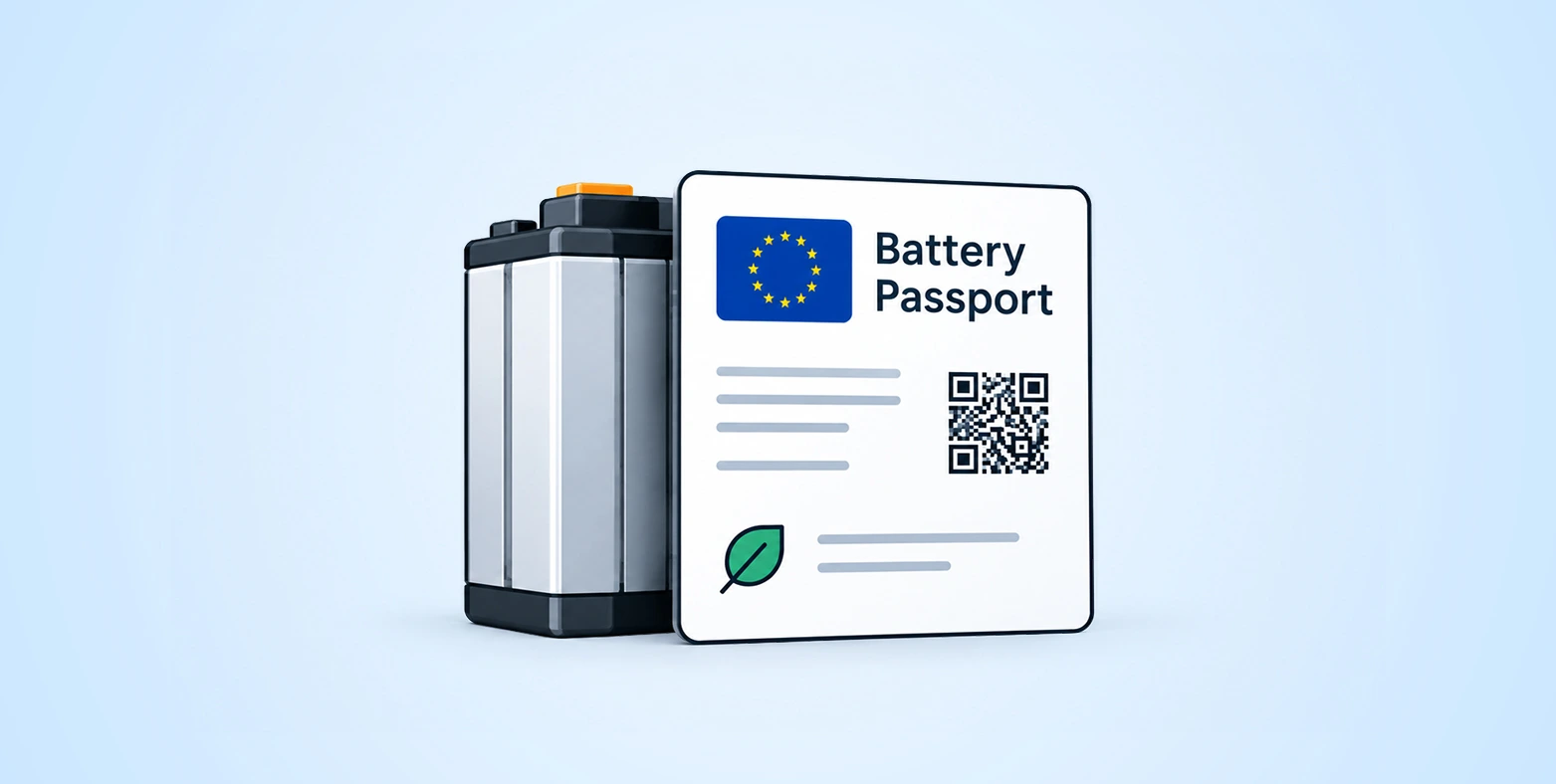
Digital Battery Passports (DBPs) replace spreadsheets with structured, automated records. Each battery is linked to a unique identifier (UID) or QR code, creating a single source of truth for compliance data. Unique identifiers and QR codes should align with globally recognised GS1 standards for traceability.
Digital Battery Passports apply Digital Product Passport principles specifically to batteries under EU sustainability laws like the Ecodesign for Sustainable Products Regulation.
Key benefits include:
Digital Battery Passports make it far easier to meet EU requirements without adding administrative burden.
The EU Battery Regulation requires more than one-off declarations. These obligations are formally defined under the EU Batteries Regulation (Regulation (EU) 2023/1542)
Manufacturers must support:
This is especially critical at end-of-life, where manufacturers must prove material recovery and recycling data, an area where battery recycling traceability with digital passports becomes essential.
Spreadsheets can’t enforce data validation, maintain reliable audit trails, or integrate with PLM, ERP, and MES systems. As requirements grow, digital systems become essential rather than optional.
Switching to a digital compliance platform ensures your data is:
Digital systems turn compliance from a manual task into a repeatable, reliable process.
Spreadsheets are no longer enough to manage EU Battery Regulation compliance. Digital Battery Passports streamline traceability, automate reporting, and ensure audit-ready data. Adopting digital compliance tools today reduces risk, saves time, and prepares manufacturers for evolving sustainability rules, keeping you ahead in the market.
Can spreadsheets really keep up with EU Battery Regulation compliance?
Spreadsheets may work for small-scale tracking, but they don’t hold up under EU Battery Regulation audits or at manufacturing scale.
What exactly is a Digital Battery Passport and why do I need one?
A Digital Battery Passport is a verified digital record linked to a battery via a UID or QR code, improving traceability and replacing manual reporting.
How does digital compliance improve efficiency?
Digital systems automate data collection, validation, and reporting, reducing errors and freeing up teams to focus on operations.
Do ERP or PLM systems need to be integrated?
Yes. Integration ensures lifecycle data flows directly into compliance reports and Digital Battery Passports.
Sources
EU Battery Regulation (2023/1542
Battery Passport data requirements and guidance (DIN DKE SPEC 99100)
GS1 Standards for traceability
Ecodesign for Sustainable Products Regulation
.svg)

.svg)


.svg)
.svg)




%202026_1310.webp)