
.svg)

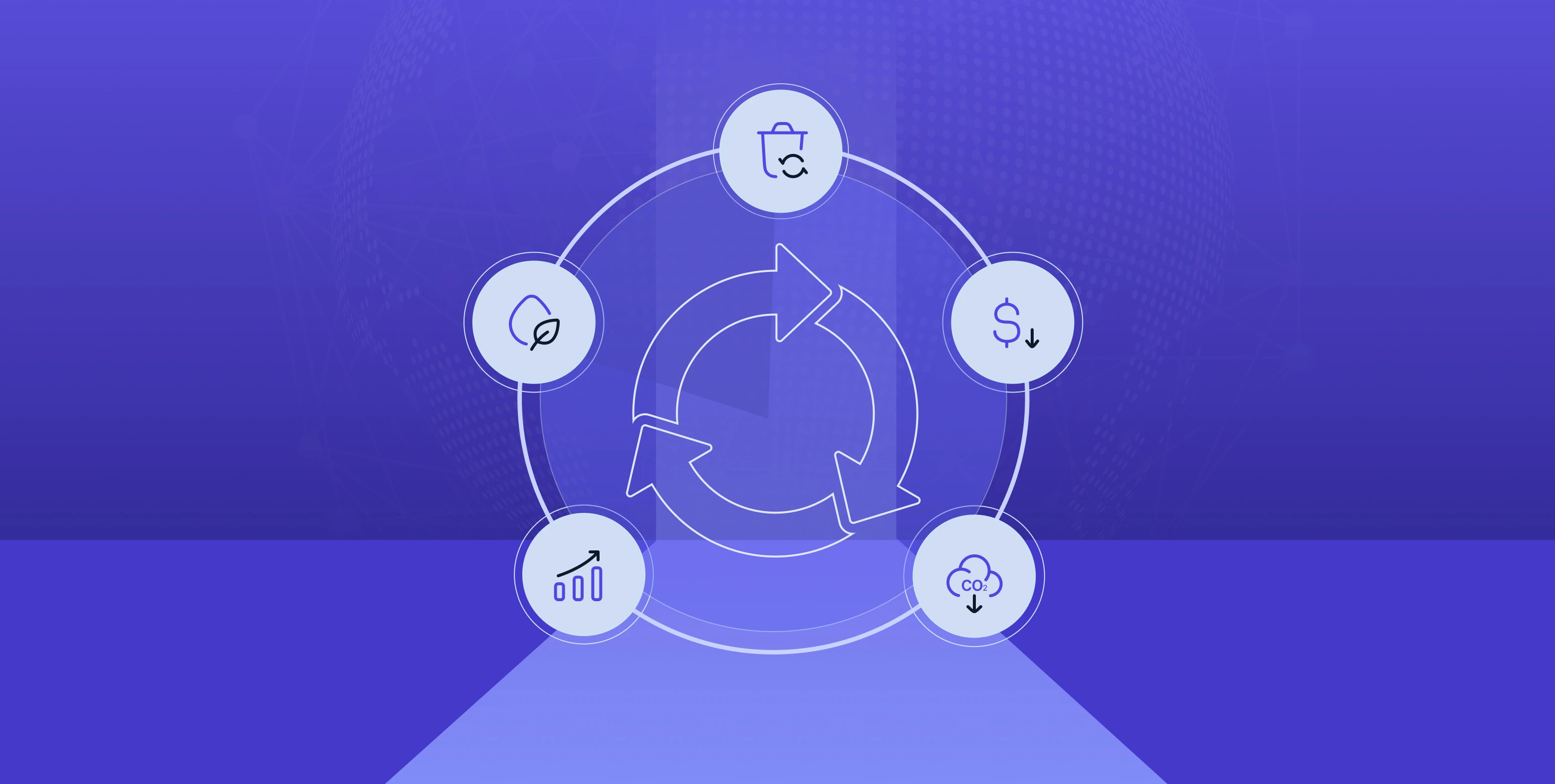
The global economy is consuming 100 billion tonnes of materials annually, yet recycles less than 7%. Continuing the "take-make-waste" model is no longer an environmental responsibility; it is becoming a business inefficiency and a regulatory liability with financial risks. Frameworks like the EU’s Ecodesign for Sustainable Products Regulation (ESPR), taking effect, circularity is fast becoming a requirement for market access.
This article will guide you through the operational transitions required to stay competitive:
Circular product design involves engineering products in a way that allows them to stay in circulation for far longer than usual. Sometimes that means designing with durability in mind; sometimes it means giving the product a life after its first use.
In practice, it means designing for:
The goal is simple: Keep products and materials in circulation for as long as possible, and reduce reliance on unprocessed or raw resources.
Circular Product design is about intelligence and intention mainly. It asks a deceptively simple question: What if a product did not have to end where it usually ends? Instead of accepting waste as inevitable, circular design looks for opportunities to extend usefulness, recover materials, and reduce dependency on primary resources.
This shift requires adopting lifecycle thinking, where every stage of a product’s journey, from extraction to end-of-life, is considered part of a continuous loop rather than a linear path.
To know more about circular product design, you can read our blog on the three principles of circularity
A circular business model is a way of creating and capturing value by keeping products and materials in use for longer, so revenue doesn’t depend on selling more new items and generating waste.
Circular business models provide alternative methods for delivering value that shift the focus away from merely increasing sales volume.
Many of these models fundamentally rely on rethinking the supply chain, shifting from linear supplier relationships to a circular supply chain where materials, components, and products continually flow back into the system.
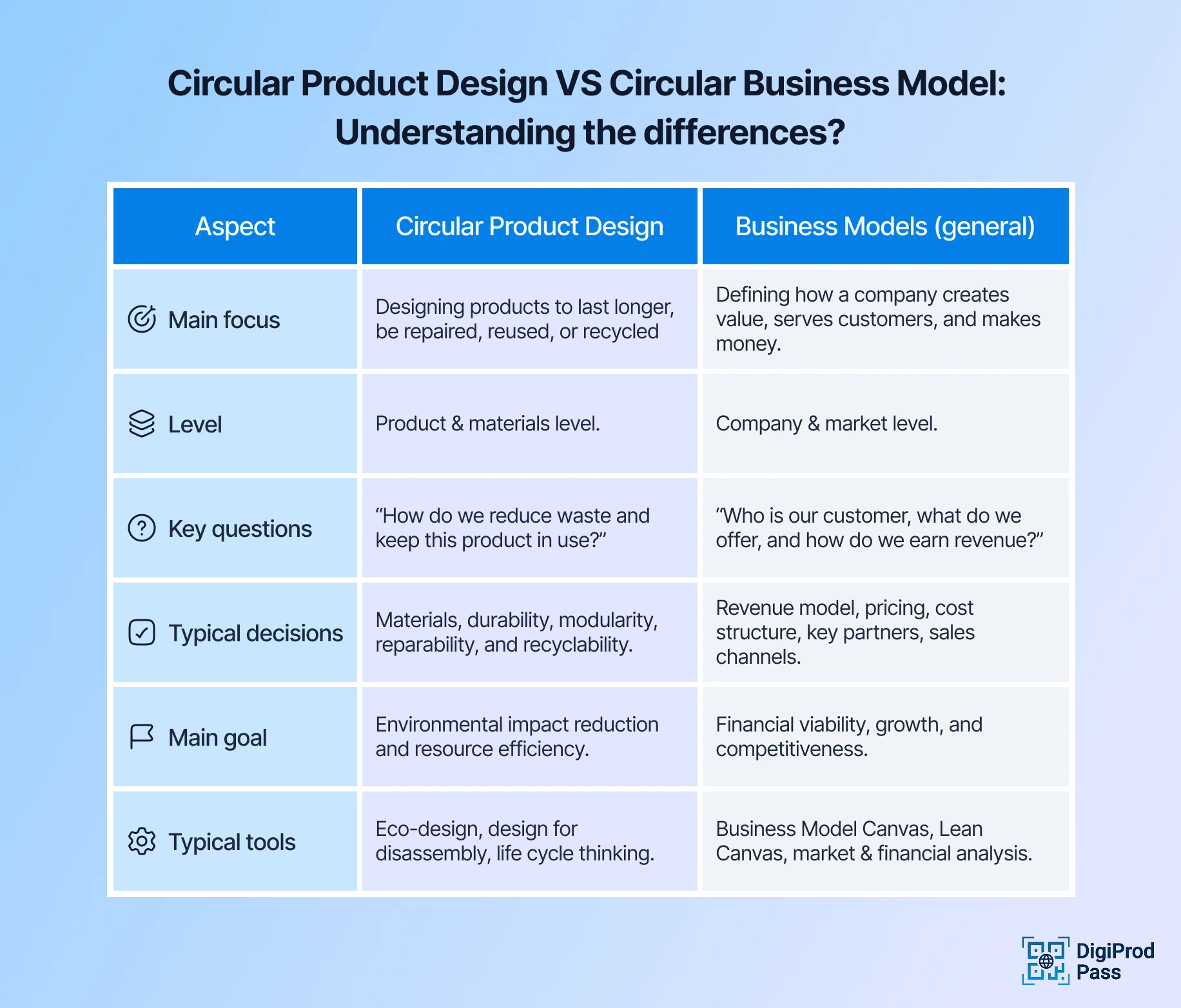
Circular business models generate profit by extending product and material use via reuse, repair, refurbishment, remanufacturing, and take-back systems. Instead of “take–make–waste,” it builds revenue from value loops like subscriptions or leasing (product-as-a-service), resale, maintenance services, and recovered materials, so growth comes from extending value, not discarding it.
Instead of selling the product outright, sell access, performance, or outcomes through subscriptions, leasing, or pay-per-use.
Recover valuable materials, components, or energy from returned products and waste streams, then feed them back into production.
Extend product life through repair, refurbishment, remanufacturing, upgrades, and resale.
Increase utilisation by enabling multiple users to share the same product (rather than everyone owning one).
Replace virgin inputs with renewable, recycled, or bio-based materials, and build supply chains around safer, regenerative inputs.
You can not repair, refurbish, or recycle what you do not understand. When products come with missing schematics, unclear component design, or unknown material composition, circularity turns into costly trial-and-error. That means slower repairs, inefficient sorting, lower recovery rates, and materials that lose value because no one can verify what they are.
The ready solution: Let’s introduce the Digital Product Passport (DPP), enforced by the EU’s ESPR, The Digital Product Passport makes traceability and transparency practical by giving each product a digital record that can be accessed across the value chain. It shows what the product is made of, how it’s built, how to repair it, and how to handle end-of-life (materials, parts lists, repair instructions, recycling guidance), so manufacturers, repairers, recyclers, and buyers can verify information and act faster, enabling smoother take-back/refurbishment and higher-quality recycling from a single source of truth.
Patagonia’s Worn Wear program is built around one idea: keep clothing in use for as long as possible. Customers can repair items and also trade in used Patagonia gear, which Patagonia then resells as used inventory. That combination turns circularity into a business loop, repair reduces churn, resale creates a second revenue stream, and take-back keeps products out of the landfill.
Signify’s circular model flips ownership: customers pay for lighting performance rather than buying fixtures. Signify installs the system and stays responsible for maintenance, service, upgrades, repair/replacement, and ultimately recycling. This aligns incentives perfectly; if the product lasts longer and is easy to recover, the business performs better.
Interface runs ReEntry™, a take-back program designed to give used carpet tiles a new life through reclamation and recycling. The model reduces disposal burdens for customers while helping Interface recover materials for future products, turning “end-of-life” into a supply stream.
Fairphone builds products with circularity, designed with especially repairability and modularity. They also reuse modules collected from users (via reuse/recycle programs) to support repairs, keeping devices and components in circulation longer instead of replacing whole phones.
The companies winning with circularity are not just recycling more, they’re designing smarter and monetising longer product lives. Circularity works when design, data, and business models pull in the same direction; get those three right, and you do not just reduce waste, you build a more resilient, profitable way to grow. In a world of rising material pressure and changing expectations, circular models offer a positive path forward: better products, stronger supply chains, and value that doesn’t end at disposal.
You might enjoy a tour of our news stories here, or book a demo to see our Digital Product Passport solution in action.
Q1: What’s the difference between Circular Product Design and a Circular Business Model?
Answer: Circular design is how you engineer products to last and return (repairable, modular, recoverable). Circular business models are how you can profit from those loops via resale, take-back, leasing/subscriptions, and services.
Q2: Why do circular models fail even with “recyclable” products?
Answer: Circularity needs good product data (materials, parts, repair/disassembly info). Without it, repair/refurb/recycling becomes costly trial-and-error—DPPs help by sharing a single source of truth.
Sources
.svg)

.svg)


.svg)
.svg)


%202026_1310.webp)