.svg)


How do you track a gram of lithium from a Chilean salt flat to a European showroom?
Suppose you can't answer that with structured, verifiable data, your access to the European market has an expiration date. Under the new EU Battery Regulation (EU) 2023/1542, "knowing your supplier" is no longer enough—you have to know their data, their carbon footprint, and their ethical footprint, too. By February 2027, the Digital Battery Passport will become the mandatory "birth certificate" for every battery. The question isn't whether you'll comply, but whether your supply chain is digitally mature enough to survive the transition.
Under the EU Battery Regulation, batteries placed on the EU market will require significantly greater transparency across their lifecycle.
Companies must be able to provide information such as:
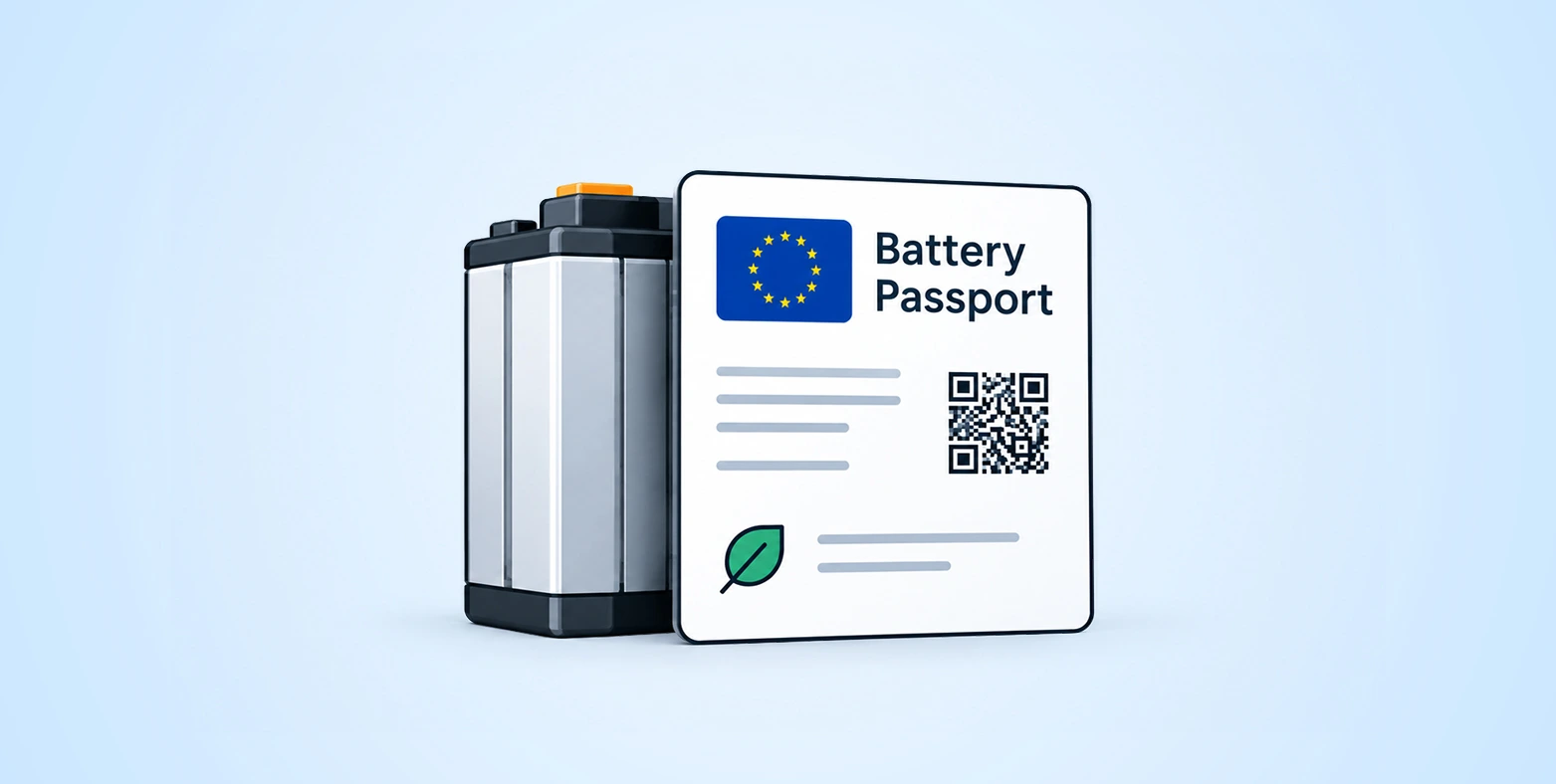
A central element of the regulation is the Digital Battery Passport, a digital record that stores key information about a battery from production through to reuse and recycling.
For manufacturers, suppliers, and importers, this means preparing systems capable of collecting, verifying, and sharing reliable data across the value chain.
Preparing for battery traceability does not happen overnight. Most organisations move through several stages as they build readiness for compliance.
The first step is understanding how the EU Battery Regulation applies to your organisation.
Key questions include:
Clarifying the scope early helps organisations plan their traceability strategy effectively.
Battery supply chains are global and complex. A single battery may involve raw materials extracted in one region, processed in another, manufactured elsewhere, and assembled into products in yet another location.
To prepare for traceability requirements, organisations should map their supply chain to Preparing Your Supply Chain for Battery Traceability Requirements
How do you track a gram of lithium from a Chilean salt flat to a European showroom?
Suppose you can't answer that with structured, verifiable data, your access to the European market has an expiration date. Under the new EU Battery Regulation (EU) 2023/1542, "knowing your supplier" is no longer enough—you have to know their data, their carbon footprint, and their ethical footprint, too. By February 2027, the Digital Battery Passport will become the mandatory "birth certificate" for every battery. The question isn't whether you'll comply, but whether your supply chain is digitally mature enough to survive the transition.
Once the supply chain is mapped, organisations can begin identifying the information that must be collected.
Typical traceability data includes:
Defining these requirements early helps align internal teams and suppliers.
Battery traceability requires structured, shareable, and verifiable data.
As the number of suppliers grows, manual processes such as spreadsheets and email quickly become difficult to manage.
Digital systems help organisations:
A strong data infrastructure becomes the foundation of long-term compliance.
Traceability cannot be achieved by one organisation alone. Suppliers play a critical role in providing the data needed to meet regulatory requirements.
Early engagement helps suppliers understand:
In practice, supplier onboarding is often one of the most time-consuming parts of traceability implementation.
While discussions about battery traceability often focus on regulation or technology, the real challenge lies in operations.
Most organisations are dealing with fragmented supply chains, inconsistent data formats, and suppliers who are not yet equipped to provide structured information.
Preparing for traceability can therefore be simplified into four key pillars.
Traceability begins with visibility. Organisations must identify all actors involved in the battery value chain and understand where traceability data must originate.
Companies need clear standards for the information they collect and how it is structured. Without consistent formats, data quickly becomes fragmented and difficult to use.
Suppliers must be equipped to capture and share the required data. Supporting suppliers through onboarding and reporting processes is critical to building a functioning traceability system.
Finally, organisations need a digital platform that securely manages and shares traceability data while supporting the creation and maintenance of the Digital Battery Passport.
One of the biggest misconceptions in the industry is that battery traceability is primarily a technology challenge.
In reality, the biggest barrier is data availability.
Many suppliers across the battery ecosystem still rely on manual reporting processes or fragmented data systems. As a result, organisations preparing for the EU Battery Regulation often encounter three common obstacles:
Addressing these issues requires tools and processes that make supplier collaboration and data management scalable. To learn more, see our guide on mapping your battery supply chain.
Although regulatory compliance is the initial driver, battery traceability can also create significant strategic value.
Organisations that build strong traceability systems often gain:
In many cases, the infrastructure developed for battery traceability can also support wider digital product passport requirements as new regulations emerge.
Preparing for battery traceability does not need to be overwhelming. By mapping supply chains, establishing clear data standards, and engaging suppliers early, organisations can build the foundations for compliance well before regulatory deadlines arrive.
At DigiProd Pass, we work with manufacturers and supply chain partners to simplify the transition to digital product passports and regulatory traceability.
The Digital Battery Passport (DBP) becomes mandatory on February 18, 2027, under the EU Battery Regulation. This requirement applies to all electric vehicle (EV) batteries, light means of transport (LMT) batteries, and industrial batteries with a capacity greater than 2 kWh placed on the EU market.
By 2027, companies must provide verifiable data, including material origin, carbon footprint, recycled content percentages (cobalt, lithium, nickel, and lead), and supply chain due diligence. This information must be accessible via a unique QR code linked to the battery's digital twin.
The "economic operator"—typically the manufacturer or importer who first places the battery on the EU market—is legally responsible for compliance. They must ensure that all supply chain data is collected, verified, and uploaded to the Digital Battery Passport system before the product reaches the consumer.
identify:
This process often reveals gaps in visibility—particularly beyond tier-1 suppliers.
Once the supply chain is mapped, organisations can begin identifying the information that must be collected.
Typical traceability data includes:
Defining these requirements early helps align internal teams and suppliers.
Battery traceability requires structured, shareable, and verifiable data.
As the number of suppliers grows, manual processes such as spreadsheets and email quickly become difficult to manage.
Digital systems help organisations:
A strong data infrastructure becomes the foundation of long-term compliance.
Traceability cannot be achieved by one organisation alone. Suppliers play a critical role in providing the data needed to meet regulatory requirements.
Early engagement helps suppliers understand:
In practice, supplier onboarding is often one of the most time-consuming parts of traceability implementation.
While discussions about battery traceability often focus on regulation or technology, the real challenge lies in operations.
Most organisations are dealing with fragmented supply chains, inconsistent data formats, and suppliers who are not yet equipped to provide structured information.
Preparing for traceability can therefore be simplified into four key pillars.
Traceability begins with visibility. Organisations must identify all actors involved in the battery value chain and understand where traceability data must originate.
Companies need clear standards for the information they collect and how it is structured. Without consistent formats, data quickly becomes fragmented and difficult to use.
Suppliers must be equipped to capture and share the required data. Supporting suppliers through onboarding and reporting processes is critical to building a functioning traceability system.
Finally, organisations need a digital platform that securely manages and shares traceability data while supporting the creation and maintenance of the Digital Battery Passport.
One of the biggest misconceptions in the industry is that battery traceability is primarily a technology challenge.
In reality, the biggest barrier is data availability.
Many suppliers across the battery ecosystem still rely on manual reporting processes or fragmented data systems. As a result, organisations preparing for the EU Battery Regulation often encounter three common obstacles:
Addressing these issues requires tools and processes that make supplier collaboration and data management scalable.
Although regulatory compliance is the initial driver, battery traceability can also create significant strategic value.
Organisations that build strong traceability systems often gain:
In many cases, the infrastructure developed for battery traceability can also support wider digital product passport requirements as new regulations emerge.
Preparing for battery traceability does not need to be overwhelming. By mapping supply chains, establishing clear data standards, and engaging suppliers early, organisations can build the foundations for compliance well before regulatory deadlines arrive.
At DigiProd Pass, we work with manufacturers and supply chain partners to simplify the transition to digital product passports and regulatory traceability.
The Digital Battery Passport (DBP) becomes mandatory on February 18, 2027, under the EU Battery Regulation. This requirement applies to all electric vehicle (EV) batteries, light means of transport (LMT) batteries, and industrial batteries with a capacity greater than 2 kWh placed on the EU market.
By 2027, companies must provide verifiable data, including material origin, carbon footprint, recycled content percentages (cobalt, lithium, nickel, and lead), and supply chain due diligence. This information must be accessible via a unique QR code linked to the battery's digital twin.
The "economic operator"—typically the manufacturer or importer who first places the battery on the EU market—is legally responsible for compliance. They must ensure that all supply chain data is collected, verified, and uploaded to the Digital Battery Passport system before the product reaches the consumer.
Sources
.svg)

.svg)

%202026_1310.webp)

.svg)
.svg)