Stay up-to-date with latest news, insights, and trends in digital product passports
Follow us
Exporting batteries to the EU in 2026 is no longer just about safety—it is about data. With the enforcement of Regulation (EU) 2023/1542, your technical documentation is effectively the "visa" your product needs to cross the border.
In this article, we are especially concentrating on the August 2026 labelling shift and the "hidden" technical data required for 2027 preparation. Here is the comprehensive, updated guide for non-EU manufacturers.
The Carbon Footprint Declaration (Active Now)
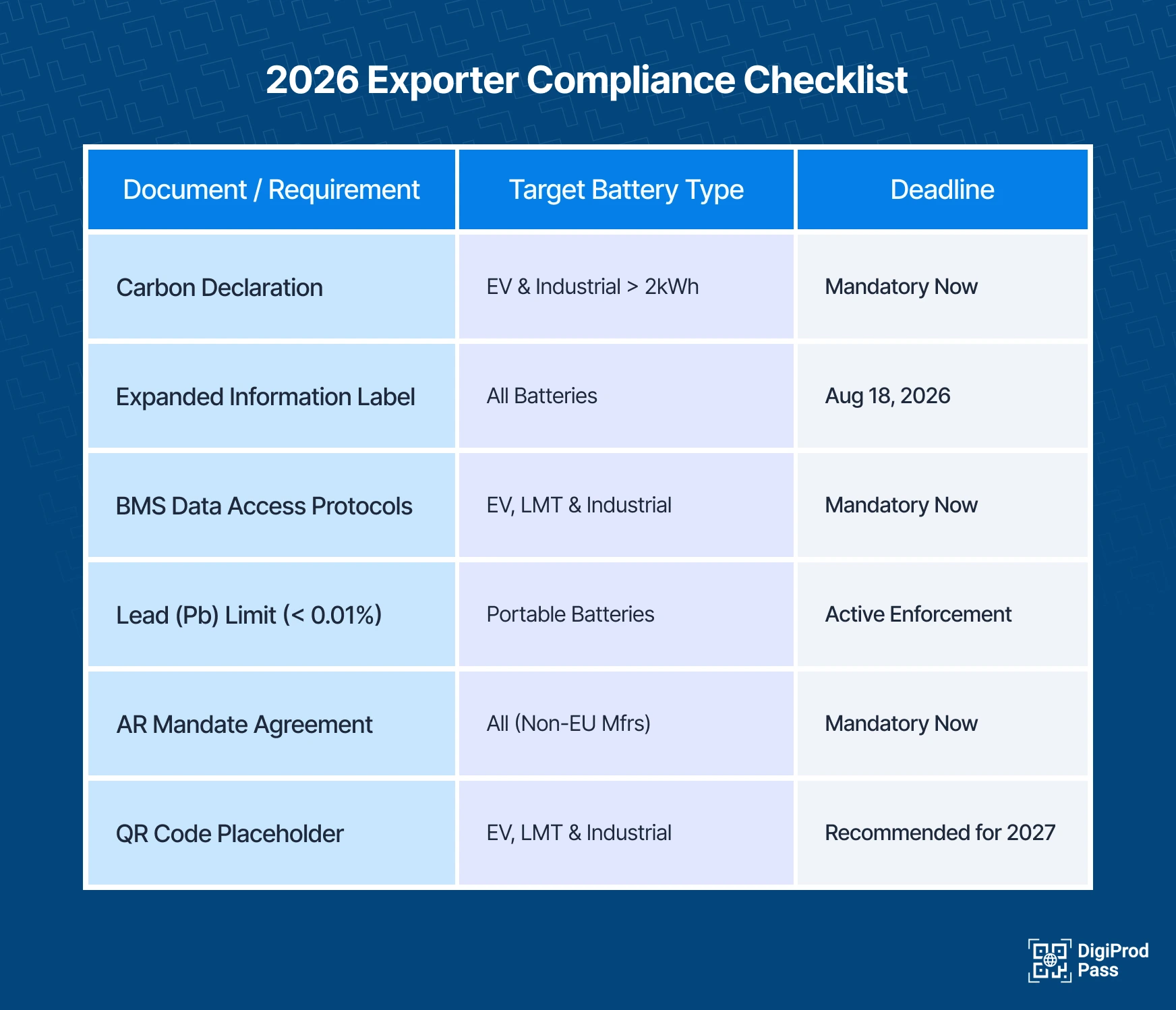
As of February 18, 2026, this is no longer a "future" requirement for industrial batteries.
Target: EV batteries and rechargeable industrial batteries > 2 kWh.
The Document: A formal declaration of the total CO2 equivalent (CO2e) specific to the individual manufacturing plant, not a company-wide average.
Crucial Detail: You must use the EU-approved Life Cycle Assessment (LCA) methodology. Until February 2027, this document must physically accompany the shipment.
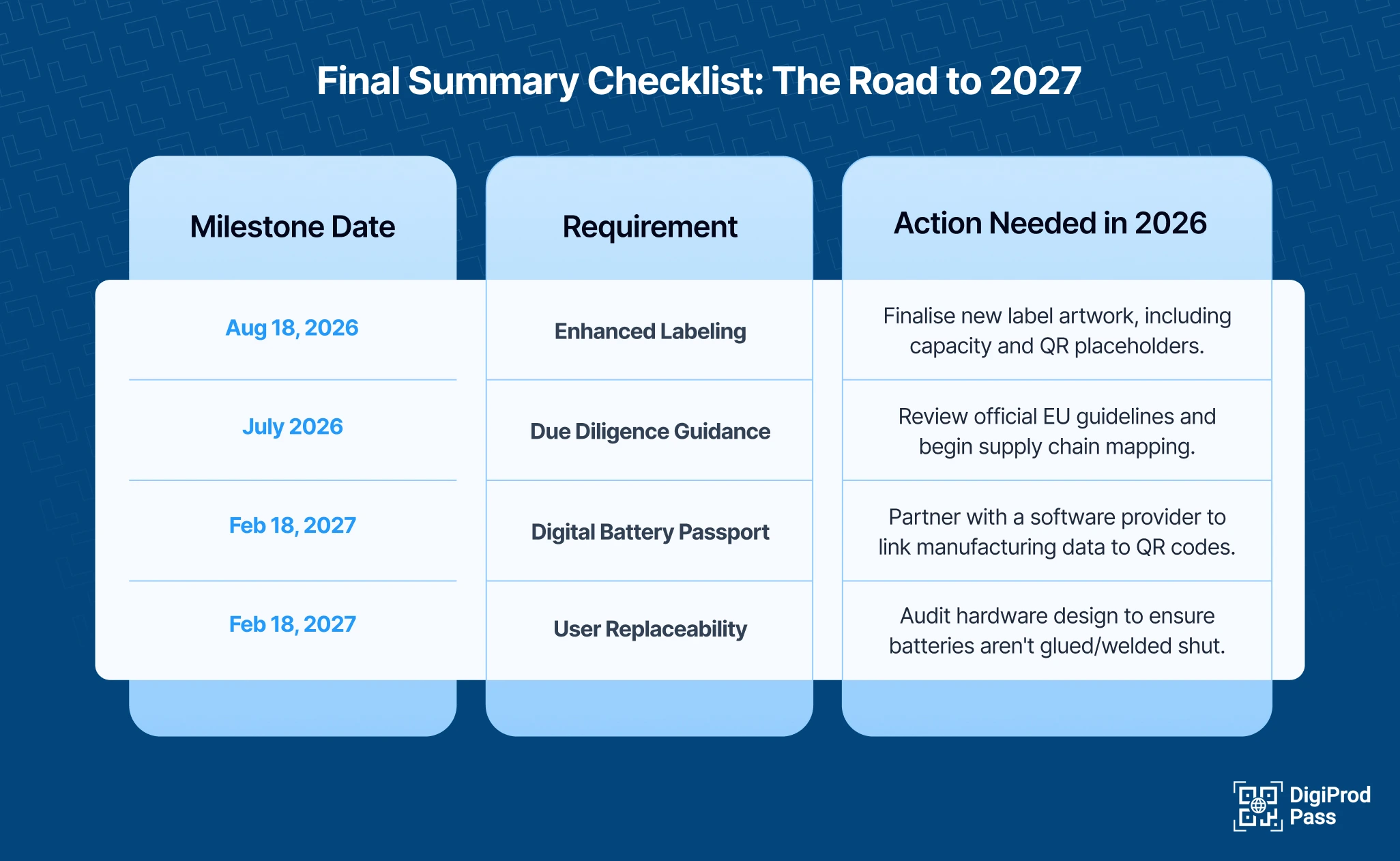
By August 18, 2026, a standard sticker won't cut it. Custom officials will look for specific data points physically printed on the battery.
Required Info: Manufacturing date, chemistry, weight, and specific capacity markings.
Non-Rechargeable Warning: Primary (non-rechargeable) portable batteries must now display their "Minimum Average Duration" (MAD) and be clearly labelled as "non-rechargeable."
Hazardous Substances: Labels must now explicitly list the presence of any hazardous substances exceeding 0.1% by weight.
EU Authorised Representative (AR) & EPR
If you are based in the US, China, or Korea, you cannot export without a "legal anchor" in the EU.
The AR Mandate: A signed agreement with an EU-based representative who holds your Technical File and assumes legal liability for compliance.
EPR Registration: You must register with a Producer Responsibility Organisation (PRO) in every specific EU member state you sell into. In 2026, you must prove you are contributing to a scheme that hits the new 45% collection target for portable batteries.
Performance & Durability (The BMS "Digital Handshake")
For 2026, the EU requires "transparency of health."
The Requirement: EV, LMT, and Industrial batteries must provide "read-only" access to the Battery Management System (BMS) data for independent repair shops and recyclers.
The Documentation: Your Technical File must include software interface protocols proving that a third party can read the State of Health (SoH) without your proprietary "master key." If you are concerned about your IP, read on to learn how to protect your trade secrets while complying with the BMS access rules.
Recycled Content Auditing (The 2027 Lead-In)
Mandatory minimums (like 16% Cobalt) start in 2031, but the reporting duty is active in 2026.
The Document: A Recycled Content Declaration.
Why it's a trap: If you don't start tracking the "Black Mass" (recycled material) from your suppliers in 2026, you will be unable to generate a valid Digital Battery Passport when it becomes mandatory in February 2027.
Peer Correction: The Due Diligence Delay
You may hear that Supply Chain Due Diligence (auditing mines for human rights) is mandatory today. Correction: The "hard" enforcement of these audits was postponed until August 18, 2027. However, if your net turnover in the EU exceeds €150 million, you must have your mapping systems ready by July 2026 for the first official guidance release.
Looking Ahead: The 2027 "Digital Passport" Era
While 2026 is about labels and physical documents, February 18, 2027, marks the digital revolution for the battery industry. If you haven't started building your digital infrastructure by late 2026, you will face an export wall in early 2027.
1. The Digital Battery Passport (DBP)
From February 18, 2027, all EV batteries, LMT batteries (e-bikes/scooters), and industrial batteries over 2 kWh must have a Digital Battery Passport.
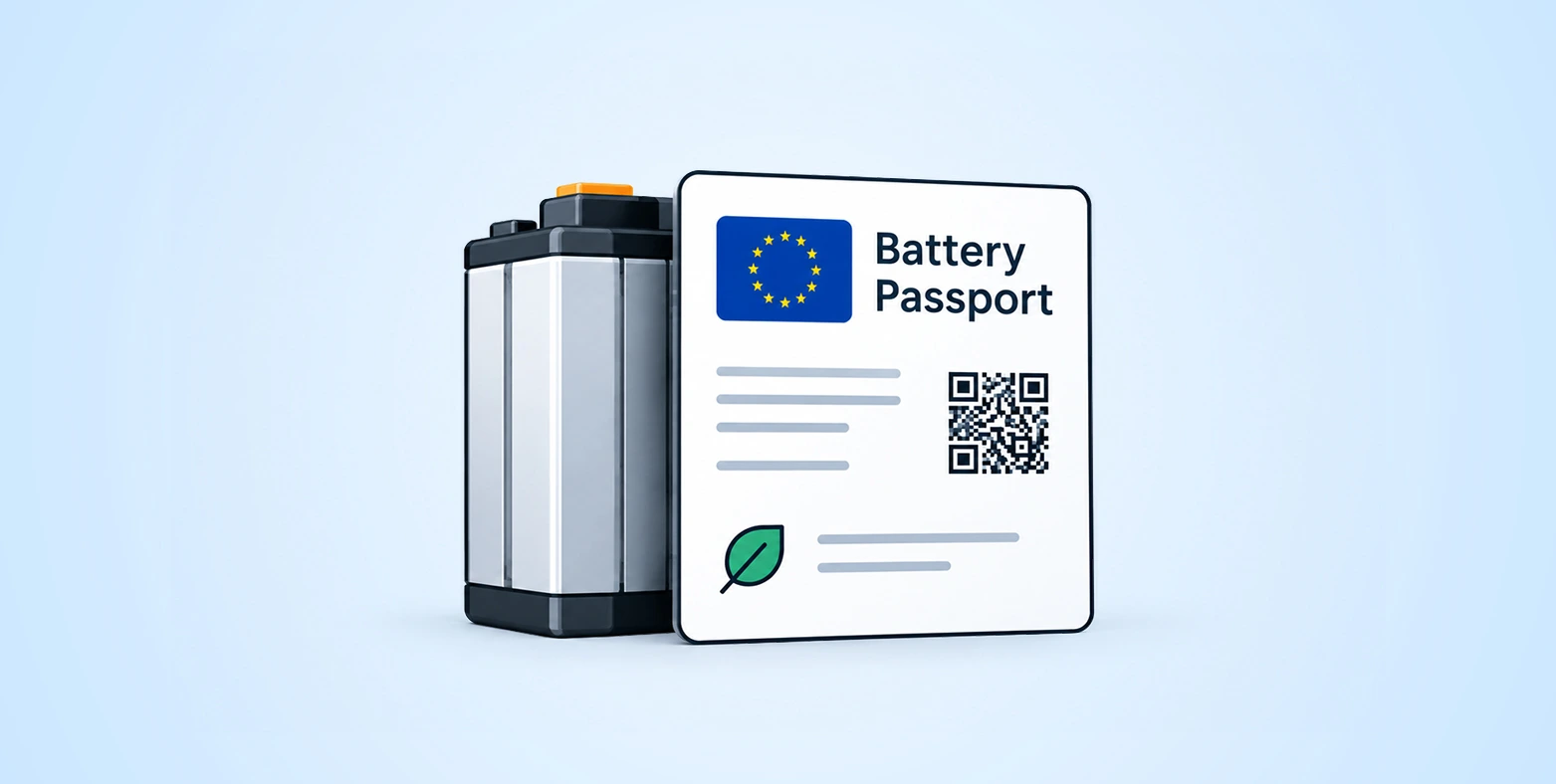
What it is: A unique, digital "twin" of every individual battery, accessible via a QR code.
The Data: It will consolidate everything we’ve discussed—carbon footprint, recycled content percentages, and BMS health data—into one cloud-accessible record.
Who sees what: Information will be tiered. Customers see sustainability data, while recyclers and repair shops get access to technical teardown instructions and chemistry details.
2. The "Right to Repair" Mandate
Also starting in February 2027, the design of products must change to meet new removability and replaceability laws.
Portable Batteries: Must be designed so that an end-user can remove and replace them using "commercially available tools" (no proprietary screws or permanent glue).
LMT & Industrial: Must be replaceable by "independent professionals" throughout the product's entire life.
The 2026 Action: If you are designing products today for a 2027 launch, you must ensure your hardware isn't "locked" in a way that violates the new circular-economy rules.
3. Supply Chain Due Diligence (The August 2027 Deadline)
As noted in our peer correction, the "hard" enforcement of supply chain audits was moved to August 18, 2027.
The Requirement: Large manufacturers (turnover > €150 million) must prove that their Cobalt, Lithium, Nickel, and Natural Graphite were sourced without human rights or environmental abuses.
The 2026 Milestone: The EU will release the final Official Due Diligence Guidance in July 2026. This will be the "rulebook" you must follow to pass your first mandatory audit in 2027.
FAQs
1. Does the February 2026 Carbon Mandate apply to small industrial batteries?
Yes. If a battery is designed for industrial use (or is a battery over 5kg not classified elsewhere) and has a capacity greater than 2 kWh, it must have a verified Carbon Footprint Declaration to enter the EU market.
2. Is the "Digital Battery Passport" mandatory in 2026?
Not yet. The Passport officially becomes mandatory on February 18, 2027. However, 2026 is the critical data-collection year. The information you gather now for your Carbon Footprint and Recycled Content audits is exactly what will populate your Passport next year.
3. Can I use my own software for the "BMS Digital Handshake"?
You can, but the EU requires that the data be accessible via open protocols. This means you must provide the software interface documentation in your Technical File so that independent repair shops can read the State of Health (SoH) and expected lifetime without needing your proprietary factory "master keys."
4. What happens if I don't have an EU Authorised Representative?
Without an AR, your CE marking is considered invalid for non-EU manufacturers. In 2026, customs authorities and online marketplaces (like Amazon or Zalando) are strictly enforcing this. Without a registered AR, your shipments risk being seized at the border or your listings being deactivated.
5. Are the recycled content minimums (like 16% Cobalt) enforced in 2026?
No. The mandatory minimum levels do not kick in until 2031. However, the reporting of your current percentages is required in 2026. You must be able to prove you are tracking these materials to stay compliant with the transparency rules.

.svg)


.svg)

.svg)

%202026_1310.webp)

.svg)
.svg)