
.svg)

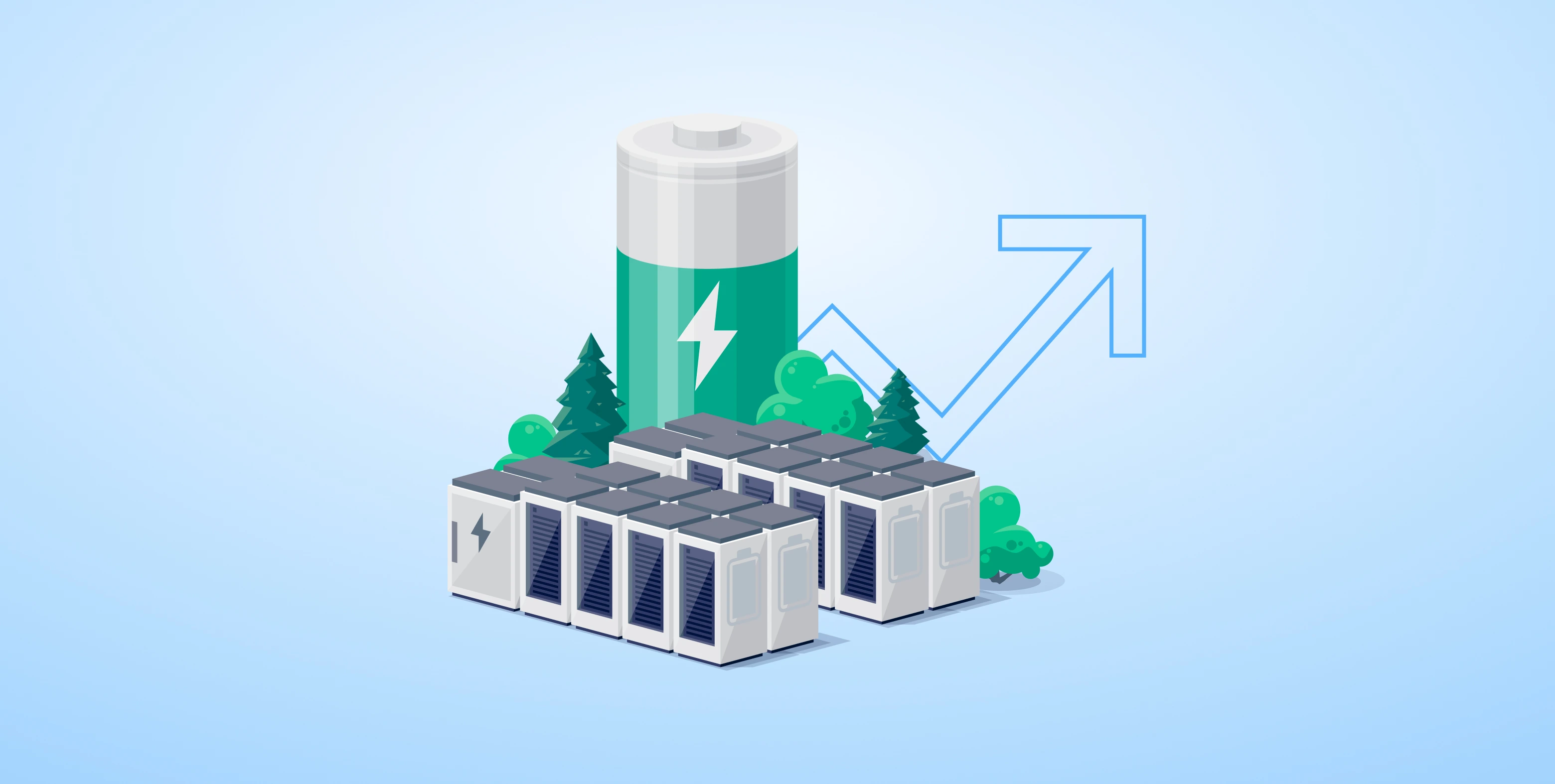
Imagine a $10,000 asset losing 80% of its market value simply because you lost its service history. For years, this has been the "Black Box" reality of the Electric Vehicle (EV) industry. When a high-capacity battery drops to 75% health, it is often pulled from the chassis and treated as expensive scrap. Why? Not because the battery is dead—it still has a decade of life left for solar storage—but because the next buyer has no way to trust its data.
In 2026, we are solving this "trust gap" through a specialised digital evolution. While the world discusses the Digital Product Passport (DPP) for clothing and electronics, the energy sector has moved faster, giving birth to a high-tech sibling: the Digital Battery Passport (DBP).
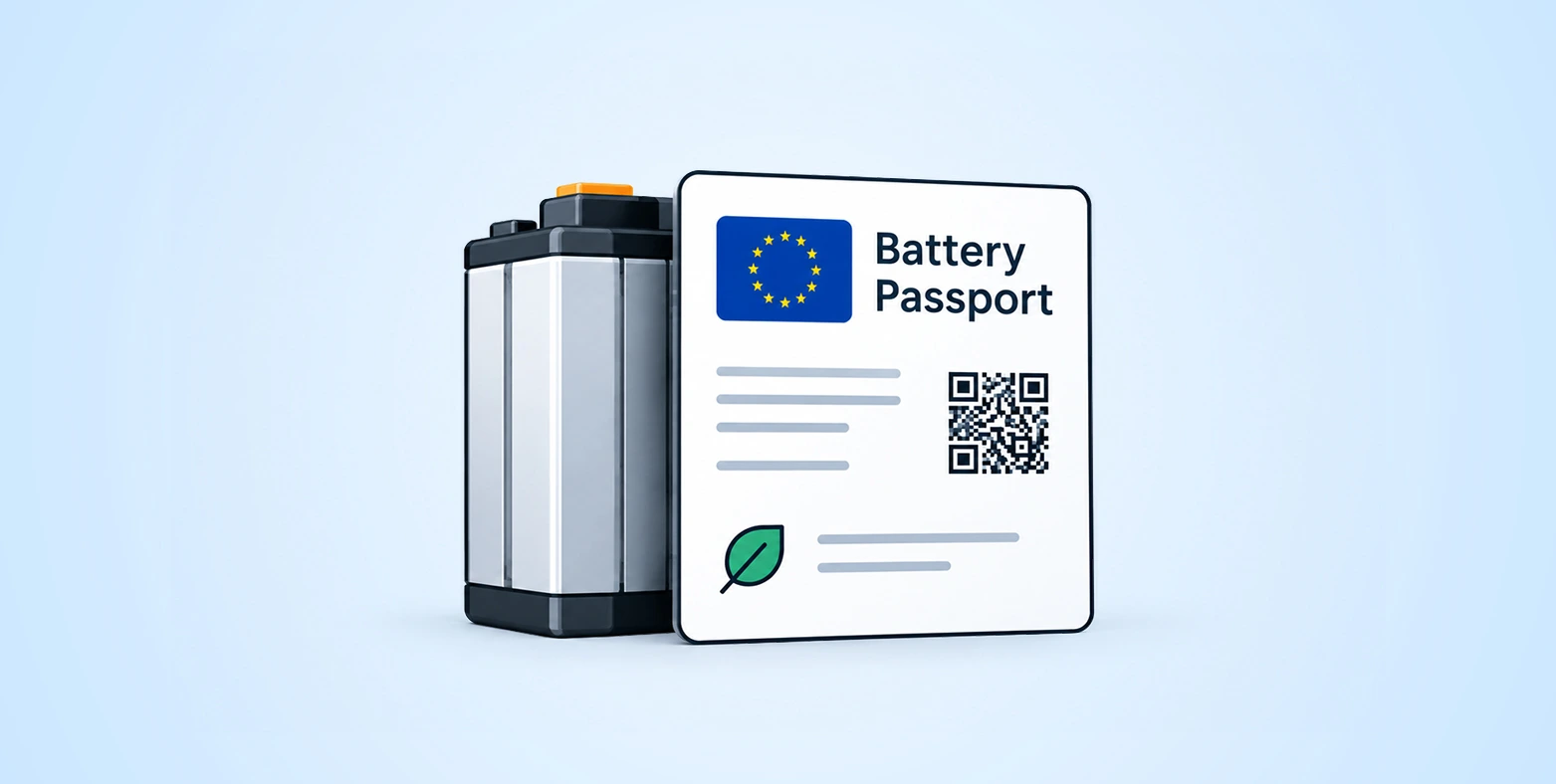
A Digital Battery Passport (DBP) is a mandatory, blockchain-verified "digital twin" designed specifically for industrial and EV batteries. It is the first industry-specific implementation of the broader Digital Product Passport (DPP) framework. By recording real-time State of Health (SoH), chemical composition, and charging history, the DBP transforms a used battery from a risky "black box" into a certified, tradable energy asset.
While the broader Ecodesign for Sustainable Products Regulation (ESPR) framework is rolling out across textiles and steel, the EU Battery Regulation is the first to mandate a digital passport.
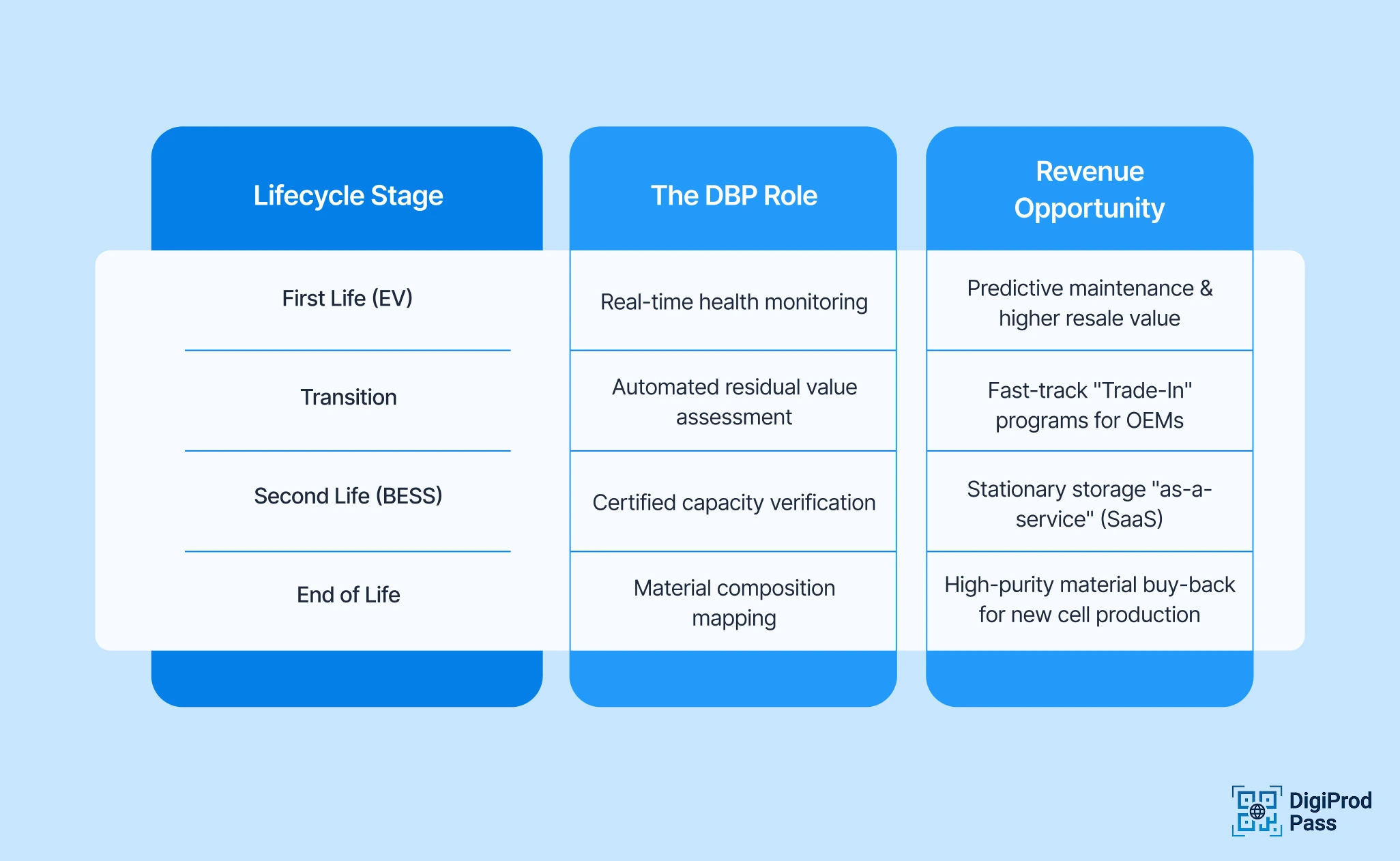
The second-life market (repurposing EV batteries for stationary energy storage) fails when testing costs exceed the battery's residual value. The digital battery passport platforms like DigiProd Pass utilises the DBP’s technical data to automate this valuation.
The DBP is not a static PDF; it is a dynamic ledger.
The regulation requires a detailed breakdown of "Active Materials."
Modern DBPs incorporate Supply Chain Due Diligence (Article 48).
Unlocking circular revenue isn't just about being "green"—it's about retaining value.
The Digital Battery Passport is the most sophisticated data infrastructure ever applied to a physical product. In 2026, transparency is no longer a PR move; it is a technical requirement for market entry.
By integrating Digi Prod Pass now, you are building a bridge between today’s manufacturing and tomorrow’s secondary energy markets. You aren't just selling a battery; you are selling a transparent energy asset.
Q: Does every battery need a passport in 2026? A: Not yet, but the window is closing. Under the EU Battery Regulation (2023/1542), mandatory Digital Battery Passports (DBP) will be enforced starting February 18, 2027, for all EV and industrial batteries with a capacity over 2kWh. In 2026, industry leaders are already in "Operational Trials" to ensure their data systems can handle the mandatory QR code integration.
Q: How does a DBP impact the "Second-Life" resale value? A: It transforms the valuation process. By providing authenticated access to State of Health (SoH) parameters—such as internal resistance ($R_i$) and remaining capacity—the DBP allows second-life integrators to verify an asset's Remaining Useful Life (RUL) instantly. This eliminates the "uncertainty discount" typically applied to used batteries.
Q: What are the recycled content thresholds I need to know? A: While the passport tracks this now, the legal minimums are tiered. By August 2031, batteries must contain verified levels of recycled materials: 16% Cobalt, 6% Lithium, and 6% Nickel. Using a platform like Digi Prod Pass ensures these percentages are documented from day one, future-proofing your product against upcoming 2036 hikes (where Lithium targets double to 12%).
Sources
.svg)

.svg)


.svg)
.svg)


%202026_1310.webp)